A cold press does not make a panel. It holds one still while the glue does. That sounds like a small distinction until you start trying to work out how many panels a day a given press can produce, and realise that the machine's job is to wait, and the waiting is what costs money.
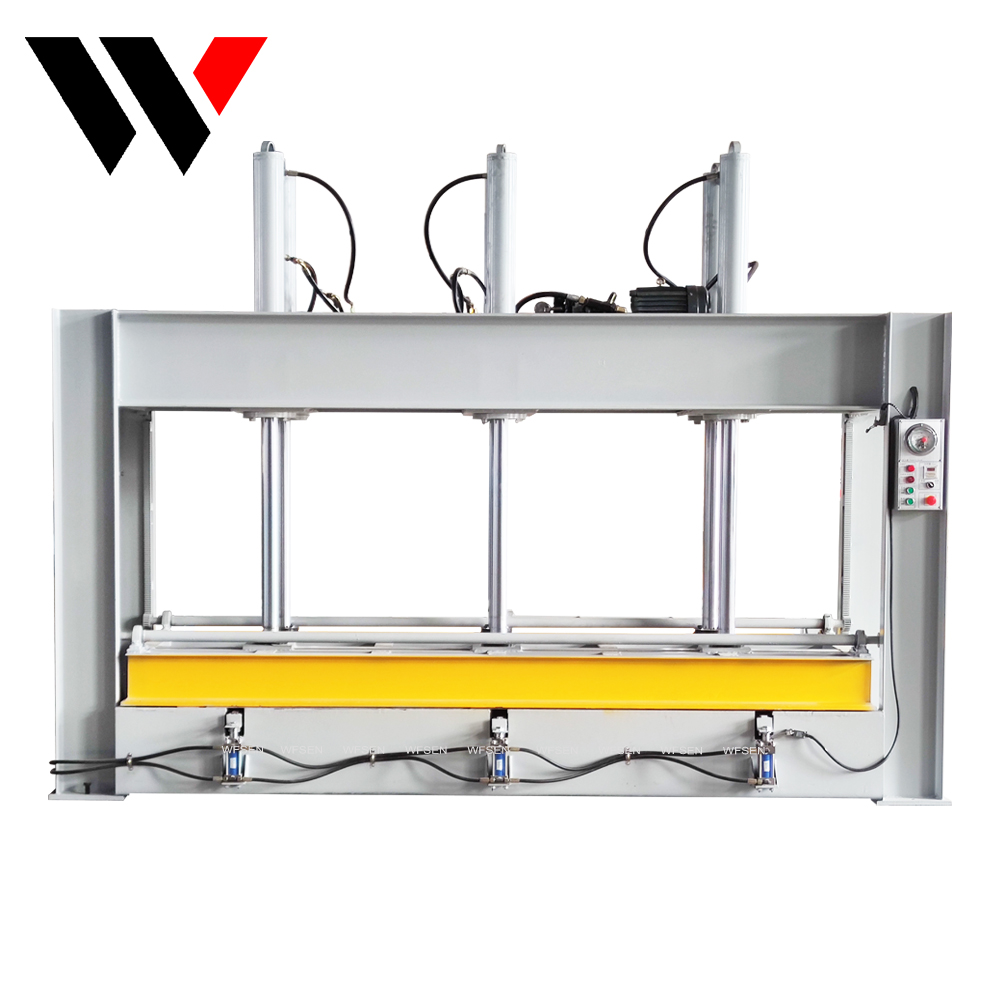
The MC100T is a 100 tonne cold press on 3050 x 1300 mm platens with a 900 to 1000 mm opening and three rows of feeding rollers. Here is what those figures do on a shop floor, and the three places where buyers usually get the sizing wrong.
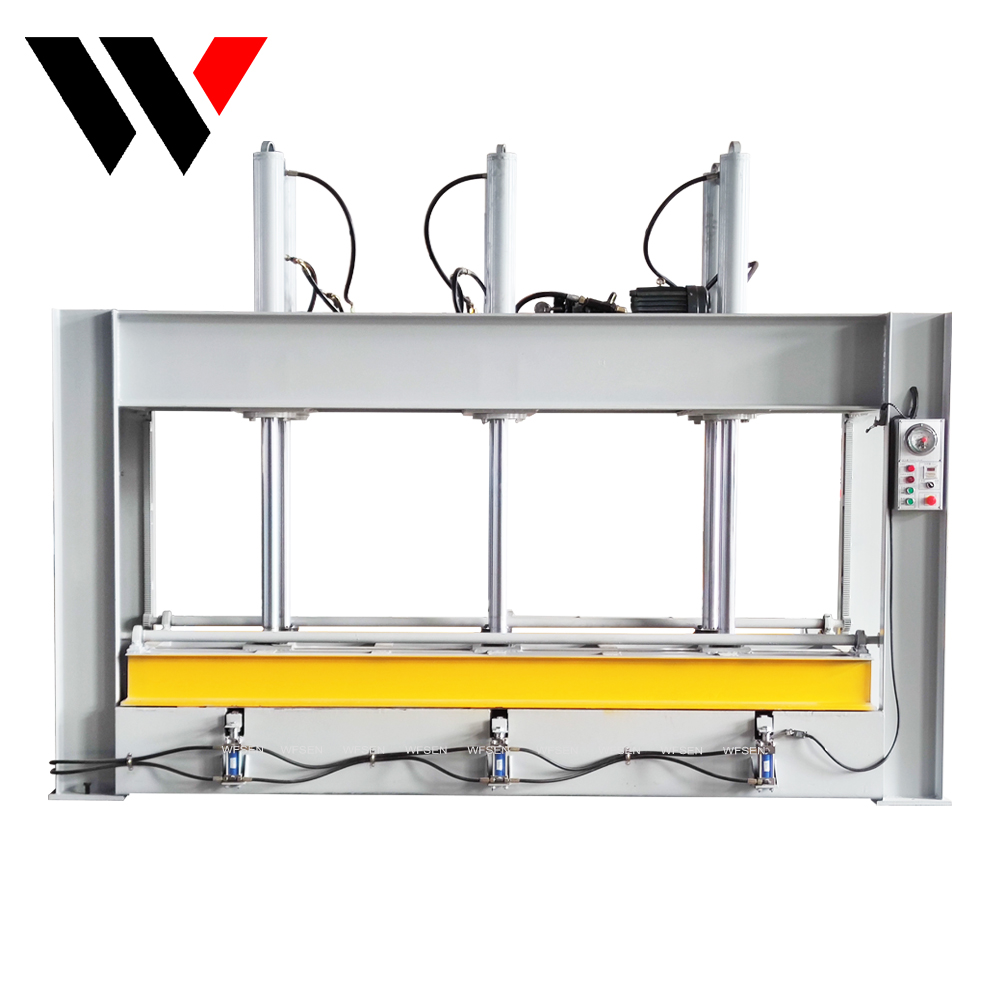
Once the platens close, nothing else happens until the adhesive reaches handling strength. No heat, no acceleration, no way to hurry it. The press is a queue with one place in it.
Queues do not go faster because someone pushes. They get louder.
So the number that decides your output is not tonnage. It is cycle time divided into the working day, multiplied by the number of openings. A 100 tonne press with one opening and a forty minute cycle makes twelve stacks a shift. A 50 tonne press with two openings and the same cycle makes twenty four.
That comparison is the whole argument for multi-opening cold presses. Tonnage alone is a misleading way to buy.
The platen is 3050 x 1300 mm. That is 3.965 square metres, or 39,650 square centimetres. A hundred tonnes spread over it gives about 2.5 kg per square centimetre.
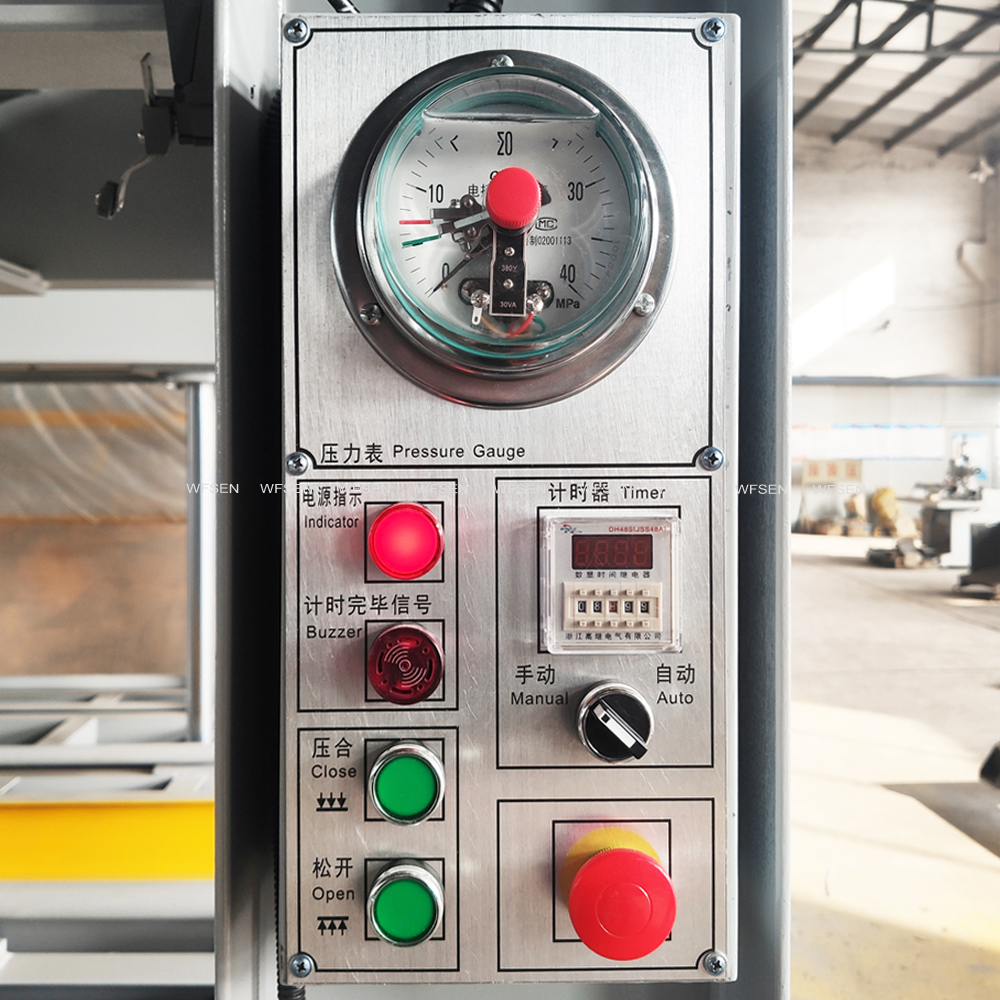
Two and a half kilos per square centimetre is a moderate pressure: enough to close a glue line evenly across a veneered panel, not enough to crush a lightweight core. Force comes from six cylinders of 100 mm diameter, driven by a 4 kW hydraulic unit.
Four kilowatts is small. That is not a mistake in the specification. Small, and correct. A cold press moves slowly and holds for a long time, so the hydraulic unit's job is pressure, not flow, and a bigger unit would buy nothing except a heavier bill.
Most people count press time and forget load and unload. On a 3050 mm platen that is the expensive half.
A lay-up of veneered boards plus a caul plate is heavy and awkward. Lifting it into an opening, aligning it to the platen edges and sliding it home takes two people and several minutes, and every minute of that is a minute the press is not pressing. Do it badly and you also lose panels: a stack that shifts on the way in produces a glue line that is thick on one edge.
So the real cycle is press time plus handling time, and handling is the part a buyer can change. Which is where the rollers come in.
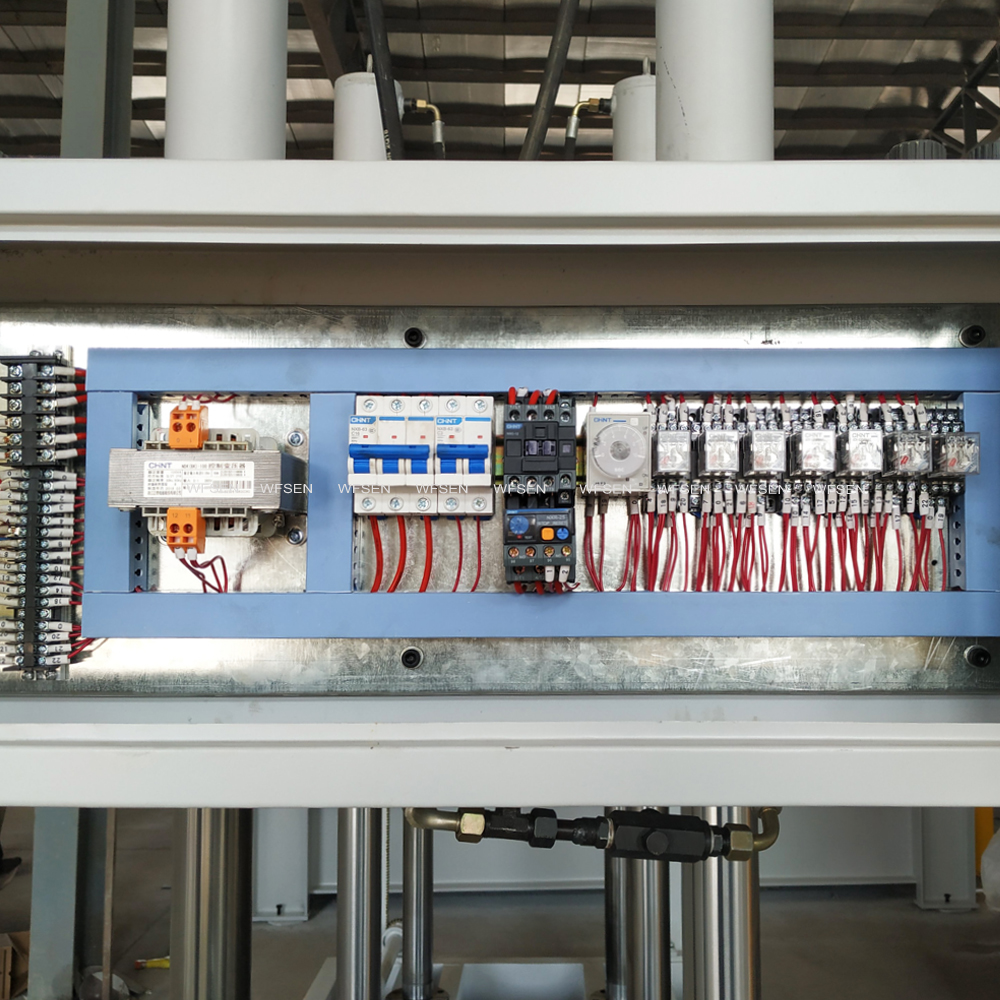
A plain cold press gives you a flat platen and nothing else. A press with three rows of feeding rollers gives you a horizontal path: the stack is built on the infeed side, rolled in, pressed, and rolled out the other side.
Two things change. Loading becomes a guiding job rather than a lifting job, which turns a two-person operation into a one-person one. And because the panel is supported the whole way in, the stack does not sag or shift as it enters the opening, which is where most of the glue line rejects actually come from.
On a 3 m platen, that is the difference between a press that runs at its cycle time and one that runs at its handling time.
Platen opening is 900 to 1000 mm. That is the clear height available for the lay-up, and it is almost always larger than buyers expect, because a stack is not one panel.
A veneered door lay-up might be a caul plate, the substrate, the veneer, a breather and a second caul. Measure the stack you actually build, not the thickness of the finished panel, and check it against the opening before the order. A press that cannot close on your largest lay-up cannot make your largest product. Measure the stack, not the panel. With the cauls on, in millimetres.
Nothing downstream can fix a bad spread. The glue spreader decides how much adhesive sits between the surfaces, and the press can only hold what is there.
Too little glue and the bond starves at the edges. Too much and the panel creeps under pressure, which shows up months later as a joint that opens in a dry room. The press cycle gets blamed for something that happened two stations upstream.
The practical rule: set the spread rate, write it down on the machine, and change one variable at a time when something goes wrong, because two changes at once means you learn nothing from either result and the next panel is a guess as well. Boring, and it works.
Cold pressing suits adhesives designed for ambient cure, and products where a long cycle is acceptable: door blanks, veneered panels, laminating where the lay-up is complex and slow to build.
If the adhesive is a hot melt or a UF system specified for heat, a hot press is the machine, and it is a different economic animal: minutes per cycle rather than tens of minutes. The 160T five layer press covers that side of the line.
The mistake is buying a cold press because it is cheaper per tonne, then discovering the glue needs heat. Cheap per tonne, expensive per panel. Buy the cycle instead.
Work it backwards. Take the panels you ship in a week, divide by the panels per stack, and you have the stacks per week. Divide again by the days you run, and you have stacks per day.
If that number is six and your cycle is forty minutes, one opening is enough, with room to spare. If it is twenty, one opening is not a scheduling problem, it is a capacity problem.
The arithmetic is unforgiving. A single opening press running a forty minute cycle for eight hours makes twelve stacks, and no amount of operator skill changes the forty minutes, because the adhesive sets at the speed it sets. What an operator can change is the handling time, which is why the rollers matter, and what a buyer can change is the number of openings.
Two openings double the output from the same footprint and the same hydraulic unit. That comparison, not the tonnage, is what should decide the purchase.
One opening is one opening. If your order book needs thirty stacks a shift and the cycle is twenty minutes, no cold press of this size will get there; you need multiple openings or a hot press line.
No amount of pressure buys a second opening. Nothing does, short of a second press.
Voltage is the second limit, and it is a purchasing question rather than an engineering one: the machine is offered in 220, 380 and 415 V. Get it wrong and you are buying a transformer or a rewind.
Weight is the third. At 3500 kg, and with a packing size of 3600 x 1500 x 2200 mm, both the floor and the container are decided before the machine is.
Confirm the voltage, the clear opening against your thickest lay-up, and the pressure per square centimetre at the platen size you are buying. Then press one stack you already know how to make, check the glue line at the edges, and measure the panel across the full 3050 mm with a straight edge rather than in the middle.
The parameters quoted here are on the MC100T cold press page. Ten minutes with your own material tells you more than the specification does.