A saw blade and a planer knife do the same job in two different places. One cuts a panel along a line you drew. The other turns a rough board into something flat enough to glue. Both are hardened steel edges, and both stop cutting long before they stop turning.
That gap between the machine still running and the machine still cutting is where sharpening sits. It is also the job most shops postpone, because postponing it costs nothing you can see on the day you decide to postpone it.
Nobody schedules it.
A dull saw blade does not stop cutting. It starts burning. Teeth rub where they should sever, the gullets load up, and the heat ends up in the panel instead of in the chip. You find it as a scorch line down the cut edge, and you feel it as feed resistance that grows across a shift.
Planer knives fail in a quieter way. A blunt knife lifts the grain rather than slicing it, so a board that came off the machine clean last week now comes off with torn fibres and a fuzzy face. Nothing changes about how the machine sounds.
That is the whole problem.
So the decision is rarely "is this blade sharp". It is "how much scrap am I willing to generate before I deal with it".
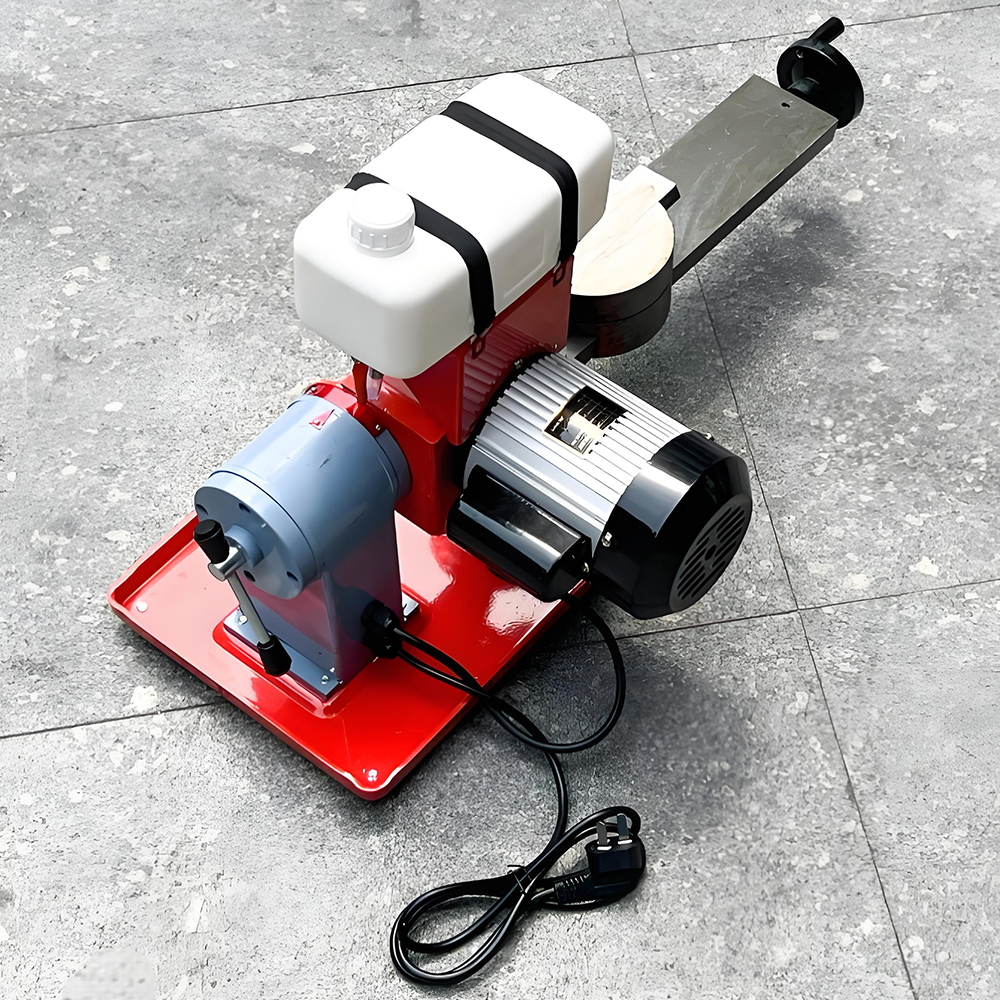
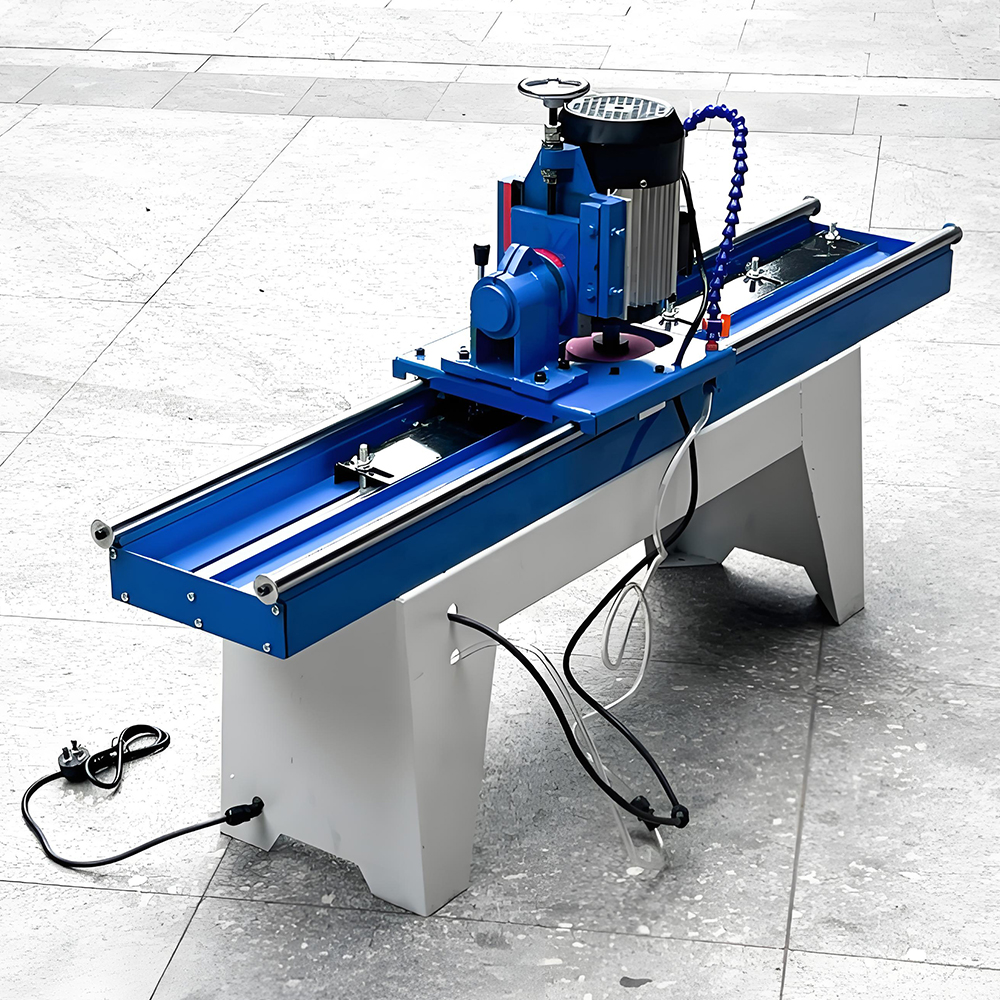
Two machines in our range exist for that decision, and they are worth looking at together because they answer the same question for two different edges. The CG101 circular saw blade grinder takes the teeth. The PS110 planer blade sharpener takes the knives.
Grinding a saw blade is not sharpening one tooth. It is reproducing one tooth at the same angle at every position around the rim. The machine's job is to make that repetition mechanical instead of manual.
Hand filing does not repeat.
The CG101 works to an angle of grinding blade of ±20° and a speed of 2850 rpm, with a motor offered at 250, 370 or 550 W. The machine weighs 28 kg and measures 720 × 430 × 300 mm at the base — small enough to stand beside a table saw rather than in a separate tool room.
Nothing in that list is decorative. The angle range is what allows the same head to cut a rip tooth and a crosscut tooth, which carry different bevels and different hook. The power tier is what decides how long a full re-tooth of a large blade takes. And the footprint decides whether the machine gets used at all, since a grinder kept in another building is a grinder that runs once a quarter.
Neither figure is padding.
The published diameter of saw on the CG101 is 80–700 mm. That single line covers more of a shop than it first appears to.
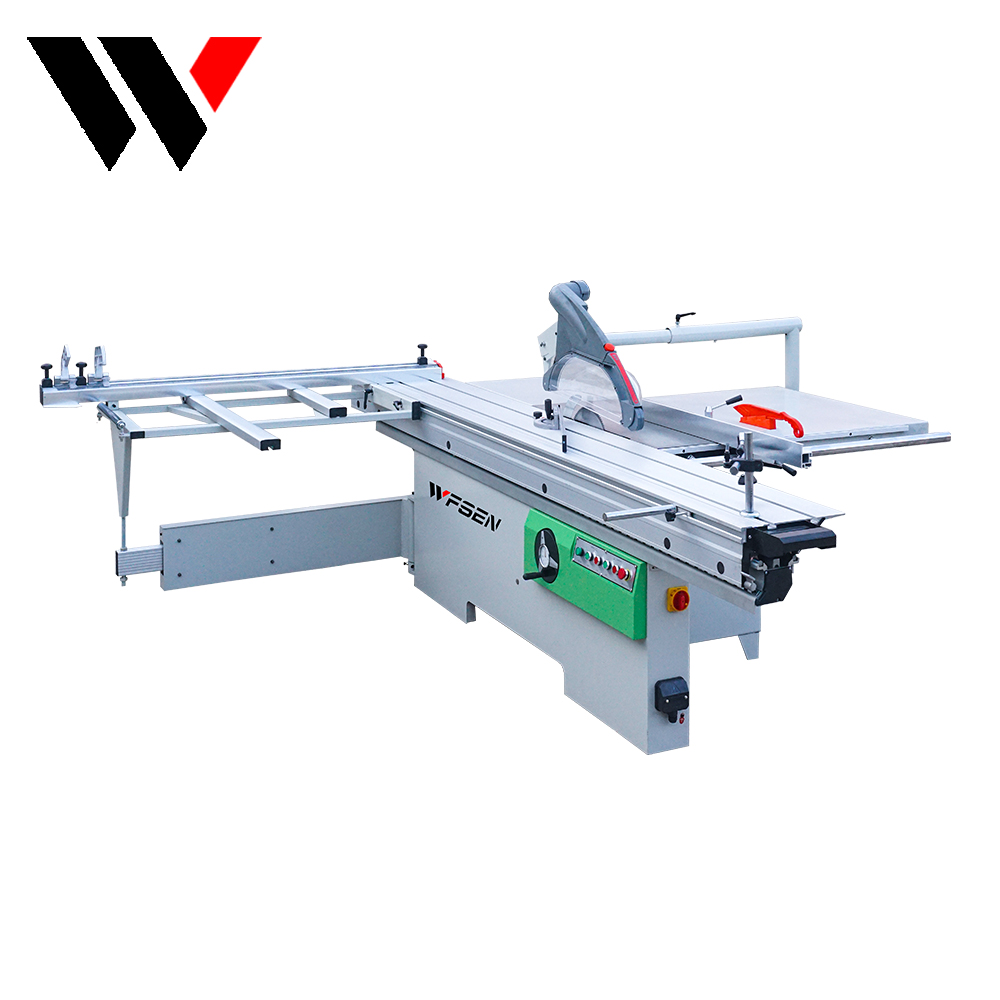
Eighty millimetres is a small trim or grooving blade. Seven hundred is a panel blade of the size that hangs off a beam saw arbor. Between those two numbers sit the blades that generate most of a workshop's scrap. The MJ6232TD sliding table saw publishes a 300 mm main saw blade and a 120 mm scoring saw blade, so one machine puts two sizes on your shelf. The sliding table saw guide sets out the rest of that machine's published numbers.
The reason the range matters commercially is that blades are not replaced as a set. They wear at different rates depending on what each one cuts. A shop running mixed work ends up with a shelf of blades in several diameters, each one somewhere different along its usable life. A grinder that only handles the largest diameter sends the rest out to a service.
Check the smallest diameter as carefully as the largest when you compare machines. It is the number that decides whether the blade on your bench saw can be touched up in-house or has to leave the building.
Most buyers check only the top of the range.
A saw tooth is not ground straight down. It carries a bevel on one face, and the bevel alternates from tooth to tooth — left, right, left, right, all the way round the rim. Sharpening a blade therefore means indexing it to the next position and grinding from the other side.
The CG101 publishes an angle of rotation frame of L30° R45°. Left 30, right 45. The asymmetric figures are the point: a blade that carries a steeper bevel on one face than the other can still be brought back to its own geometry, rather than being forced into a symmetrical profile it never had.
Get this wrong and the blade still fits. It still spins. It simply cuts in one direction better than the other, and the shop blames the saw.
The grinder never gets the blame.
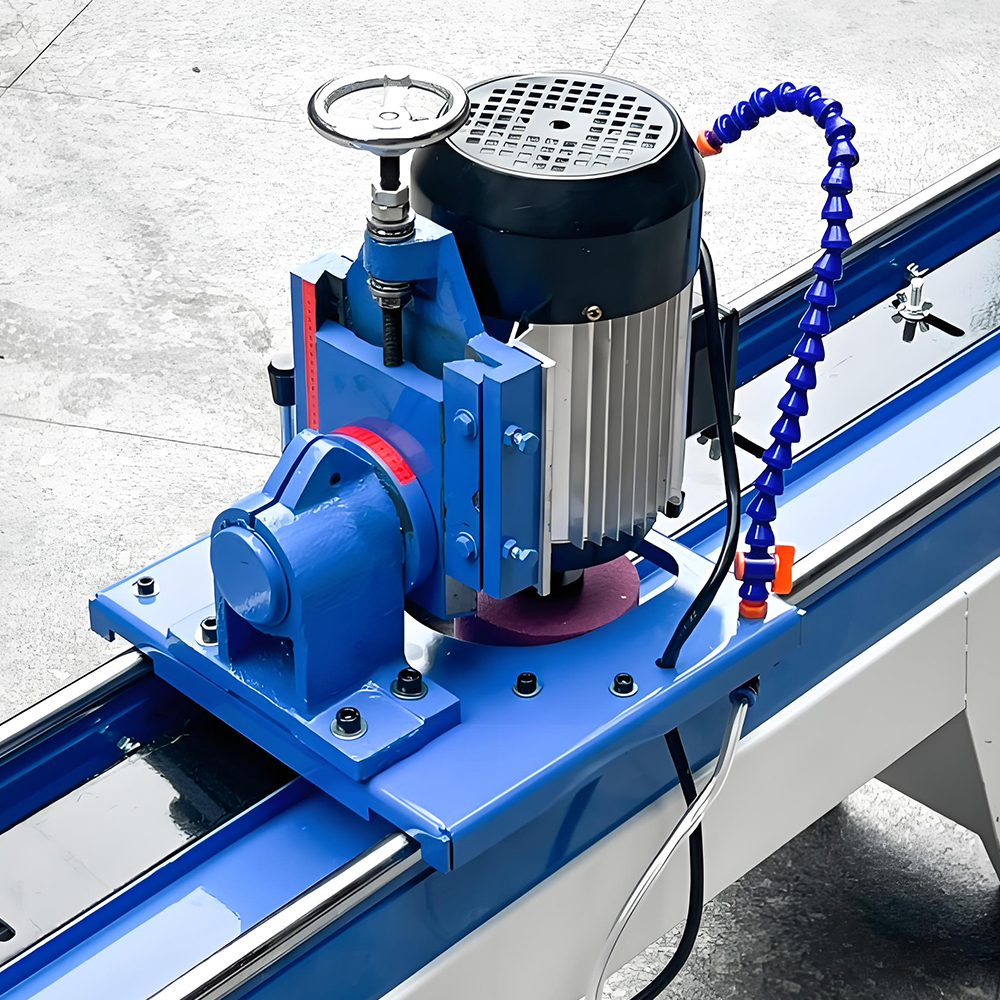
A planer or thicknesser head does not hold one knife. It holds a set, and the set has to come back to the same projection or the head will not cut a flat surface. That is what makes knife sharpening a different problem from blade sharpening.
The PS110 is built around that constraint. It publishes a one-time processing quantity of 4 pcs — four knives clamped and ground in one setting, at a maximum grinding width of 55 mm and a maximum grinding thickness of 8 mm. Power is 550 W, speed is 2850 rpm, and the whole machine weighs 50 kg at 1350 × 300 × 800 mm.
Read the four-knife figure against a planer head and it stops being a specification and becomes a working method. A set ground together in one pass shares one register. A set ground one knife at a time shares whatever the operator managed to repeat, four times, by hand.
That is not a register. That is a hope.
This is the same logic that runs through the whole planing machine comparison: the machine sets the register, and the tooling has to match it. A surface planer and a thicknesser planer hold their knives differently, but neither will produce a true face from a set that is out of register.
Published parameters, taken from each machine's own specification table. Where a machine does not publish a figure, the table says so rather than filling the gap.
| Published parameter | CG101 saw blade grinder | PS110 planer blade sharpener |
|---|---|---|
| Edge it serves | Circular saw blades | Planer knives |
| Motor power | 250 / 370 / 550 W | 550 W |
| Speed | 2850 rpm | 2850 rpm |
| Working range | Blade diameter 80–700 mm | Width 55 mm, thickness 8 mm |
| Batch in one setting | One blade, indexed tooth by tooth | 4 knives |
| Angle of grinding blade | ±20° | not published |
| Angle of rotation frame | L30° R45° | not published |
| Weight | 28 kg | 50 kg |
| Overall size | 720 × 430 × 300 mm | 1350 × 300 × 800 mm |
The row that separates them is not power or speed. It is batch size. The CG101 works one blade at a time and indexes around the rim; the PS110 clamps four knives and grinds them against one register. The extra weight and the longer bed separate them physically, but the working method is the real difference.
Weight is the easy part to compare.
Both machines publish a spindle speed of 2850 rpm, and the matching figure is worth a sentence of its own.
That speed is what a standard induction motor settles at on the supply these machines are built for. Neither grinder depends on a special drive to reach it. For a buyer, that is the useful part: there is no variable-frequency unit to configure, no drive card to fail in a dusty workshop, and no reason the spindle speed should drift away from the figure on the page as the machine ages.
It also means the two machines share a consumable logic. A grinding wheel rated for one of them is rated for both, because the surface speed at the wheel is the same on either.
One wheel, two machines.
Every pass removes steel. A saw blade that starts at one diameter is smaller after each sharpening, and the tooth that does the cutting gets shorter with it. A planer knife ground back far enough stops clamping properly in the head.
So a grinder buys you cycles, not immortality. The useful question is not how many times a blade can be sharpened — no page in this range publishes that, and any general figure you are handed will have been arrived at on somebody else's material. The useful question is whether the blades you run are worth returning to service at all.
For a tipped blade, the answer is usually yes, because the tip is the expensive part and it can be replaced when the body finally runs out. For a solid blade near the bottom of its life, the arithmetic turns the other way. Having both numbers on your own shelf — what a new blade costs against what an hour of your own grinding costs — is what makes the call obvious instead of a guess.
Run that arithmetic once.
Keep the blades you grind in the same shop as the saws that run them. The saw machine range publishes the blade sizes each model is built around, and a grinder that covers those diameters covers most of what your own floor actually consumes.
Most of what decides the machine is already in your own workshop, and one pass through your blade shelf is enough to write it down.
Send that list to the WFSEN engineering team and the answer comes back against published numbers rather than against a catalogue photograph.
Can one machine sharpen both saw blades and planer knives?
Not in this range, and the reason is the clamping rather than the grinding. A saw blade is indexed around a rim; a planer knife is held flat against a register as part of a set. The CG101 and the PS110 are built around those two different jobs.
Does the CG101 cover a 700 mm panel blade?
Yes. The published diameter of saw is 80–700 mm, so the range runs from small grooving blades up to panel sizes. Confirm your own extremes before ordering rather than working from the middle of the range.
Why does the PS110 grind four knives at once?
Because a planer head holds a set, and the set is only useful if every knife projects to the same figure. Grinding four in one setting gives them one register. Grinding them one at a time gives them four.
How often should a blade be sharpened?
On signal, not on a schedule. Watch for scorching along the cut, feed resistance that climbs during a shift, and a face that comes off the planer with lifted grain. Those signals arrive before a customer sees them on a finished panel.
Is a grinding wheel included?
Ask us with your blade or knife dimensions. The spindle speed is published at 2850 rpm on both machines, which is the figure a wheel has to be rated for.
Sharpening is one maintenance decision among several on a woodworking floor. How the cutting machines themselves differ is set out in the planing machine comparison, and the saws these blades run on are listed under the saw machine range. If you would rather send us the blades you are running than read further, the contact page reaches the same engineers who build the machines.