
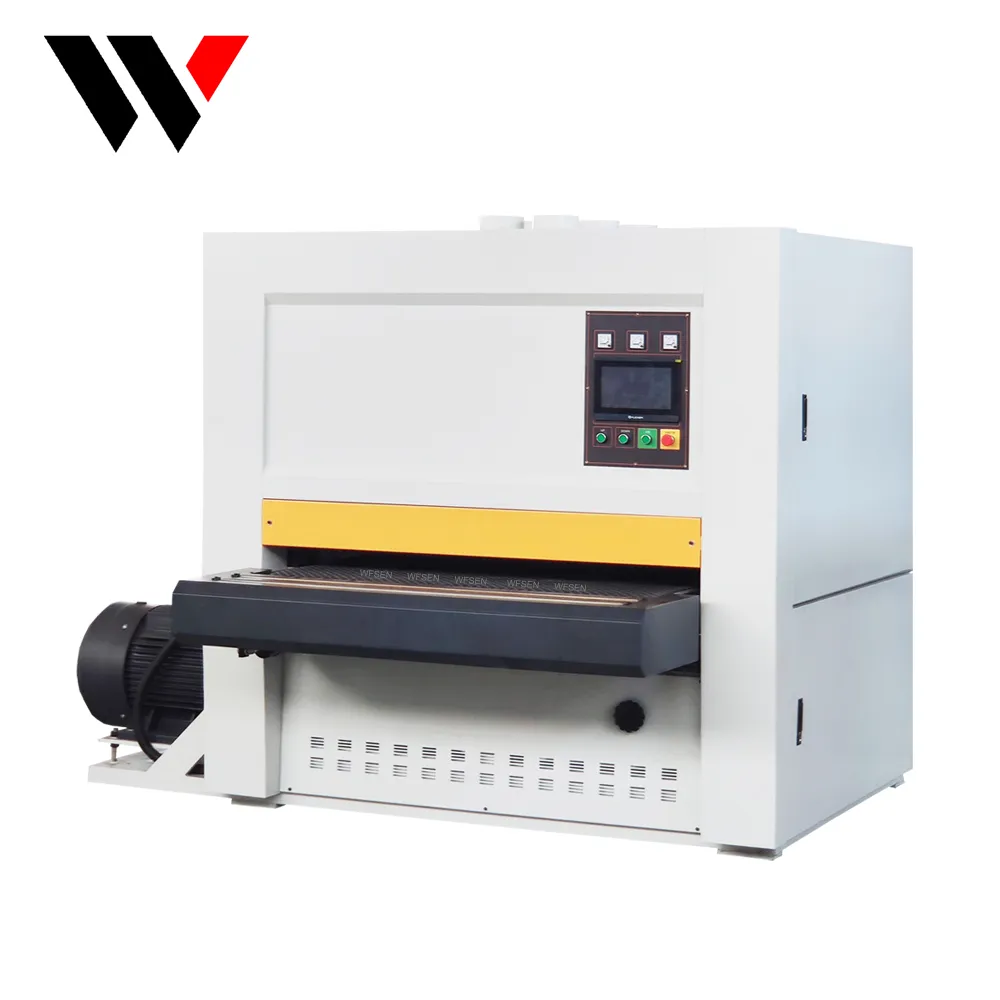
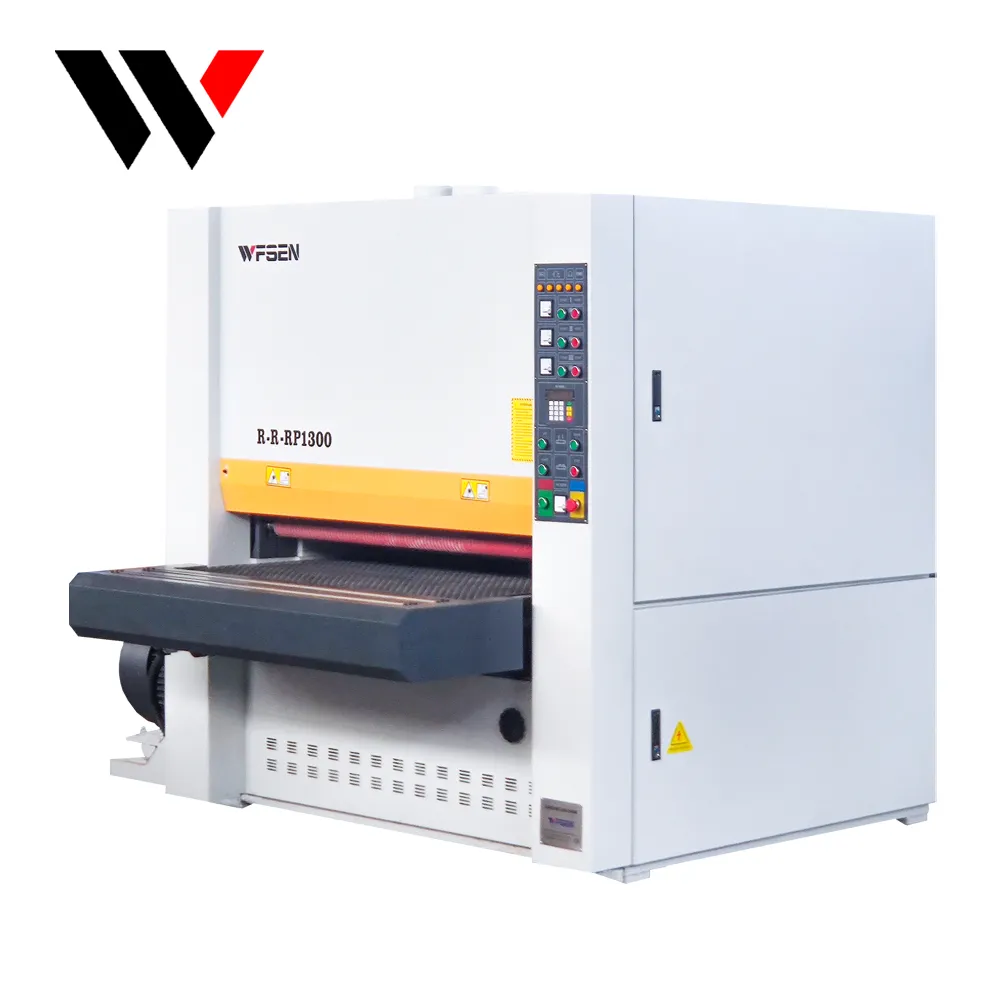
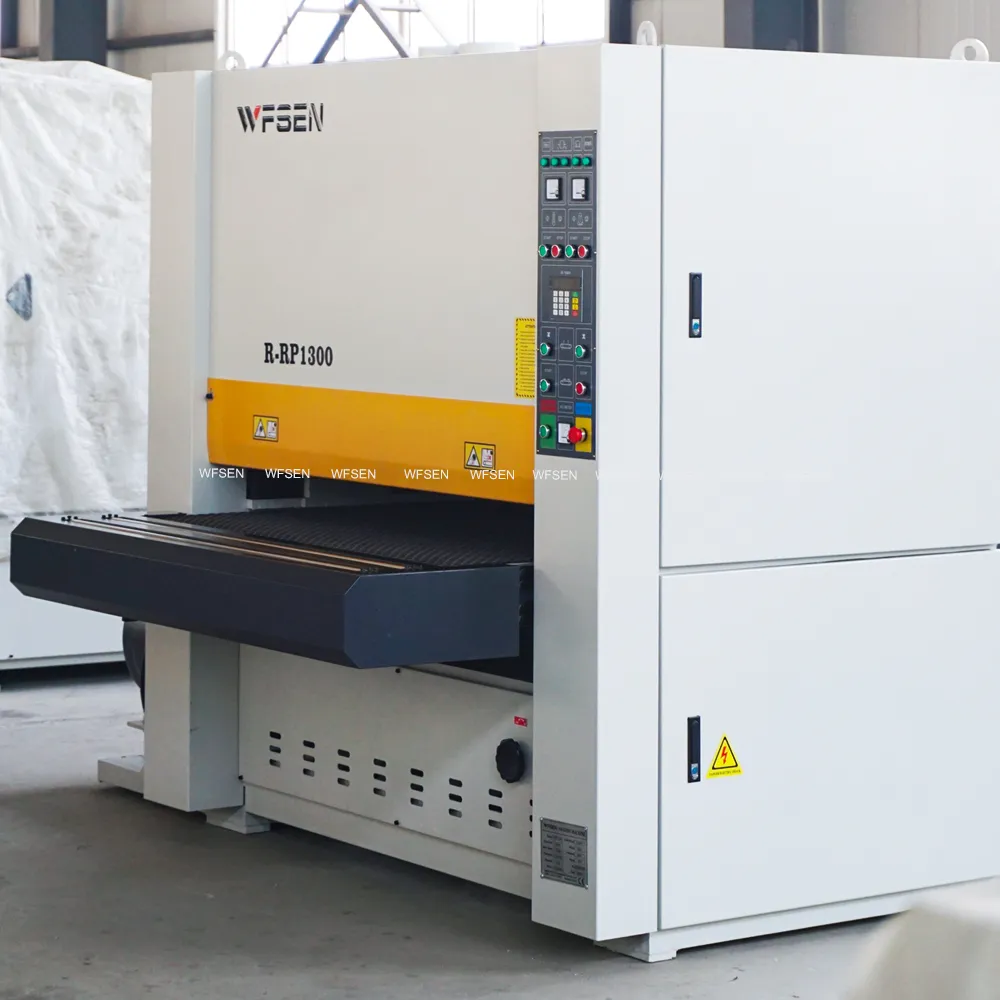
The R-R-RP1300 is a heavy wide belt sander for flat board faces — MDF, particle board, plywood and veneered panels. One table covers two builds, a 1000 mm and a 1300 mm machine, from 3 mm to 110 mm thick at 6 to 30 m/min. The first decision is how many sanding rollers you need, two or three.
Two Builds, and What the Roller Count Changes
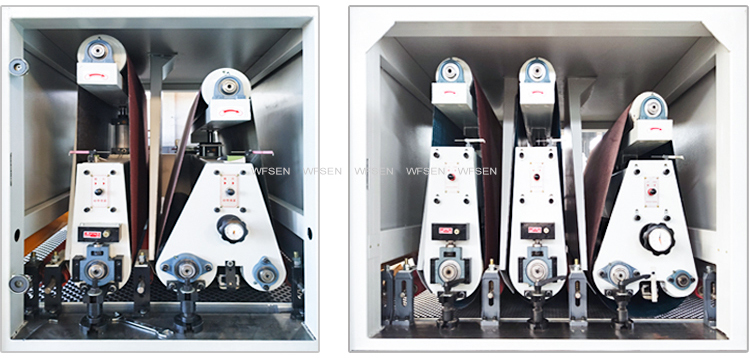
R-RP is the two-roller build and R-R-RP is the three-roller build. The drawing below shows the difference: the same conveyor and the same frame, with one more sanding roller in the cabinet.
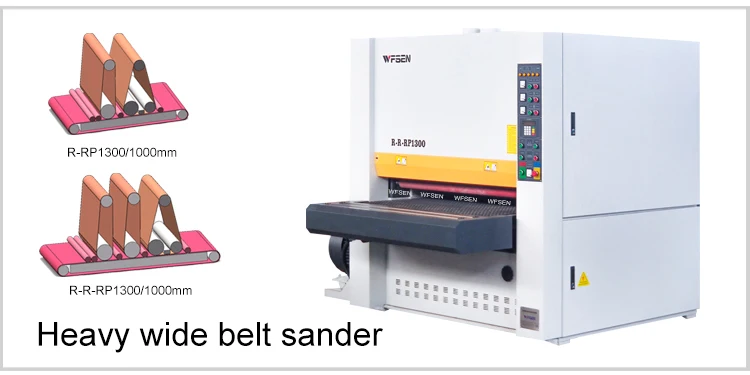
Both builds run the same thickness and feed range, and part on motors and weight: up to 37 kW on the first motor, and 2000 kg to 4100 kg by build and width.
Rows in the table often carry two values, for example 190, 240 mm for the first roller, because one table serves both builds. If a value decides your electrical supply or your floor layout, confirm the exact figure for your build with us in writing.
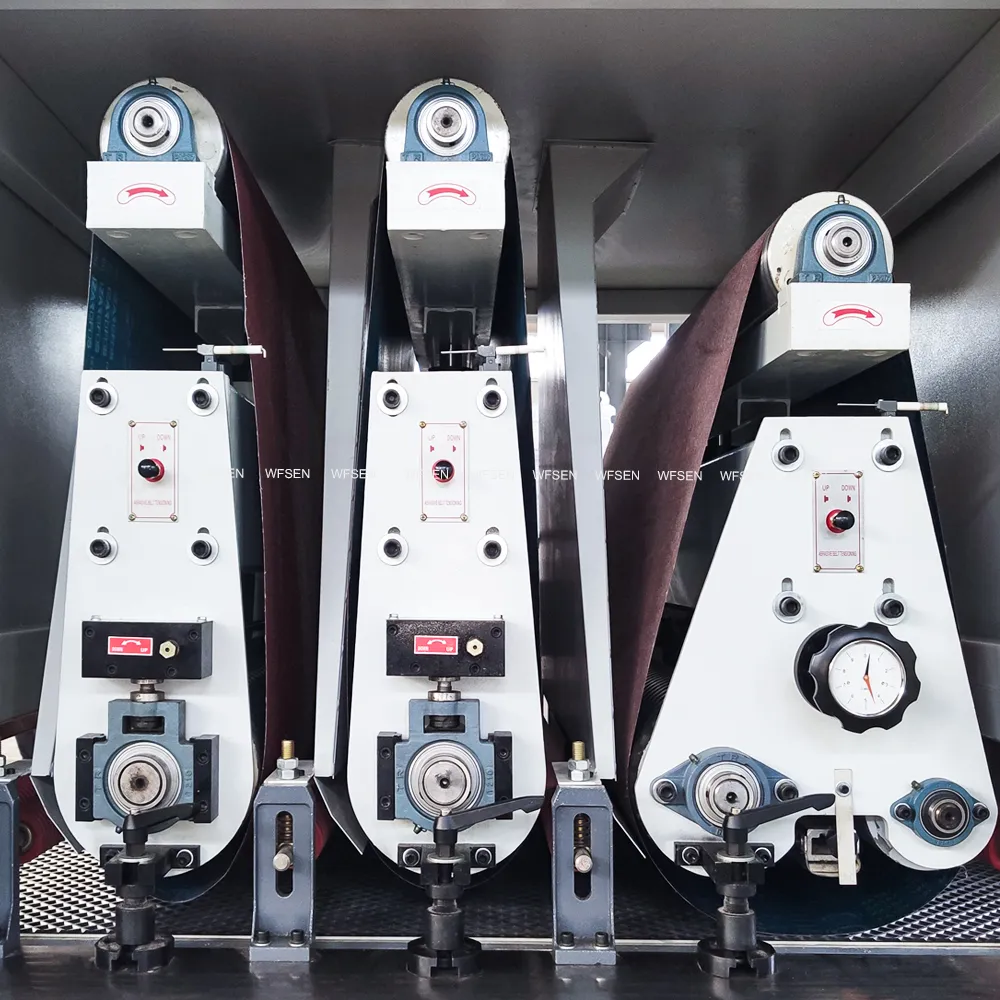
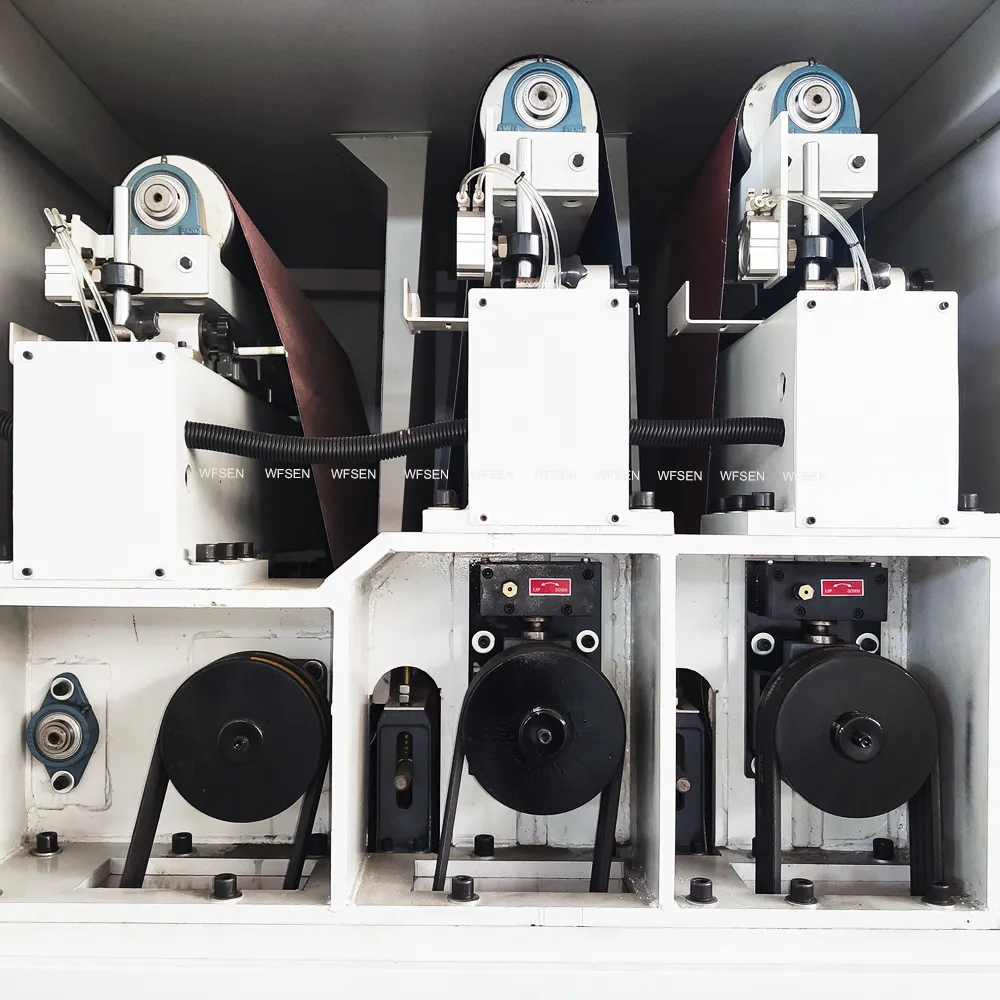
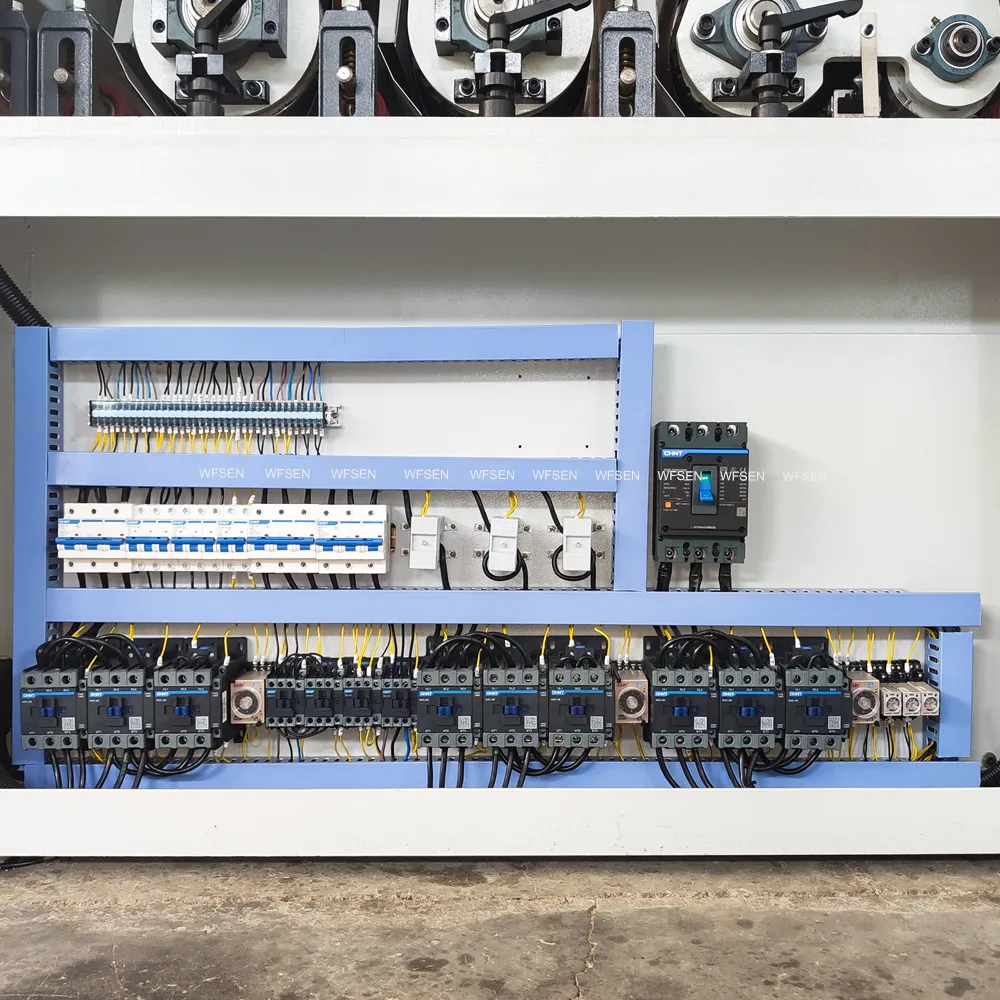
Inside the Cabinet
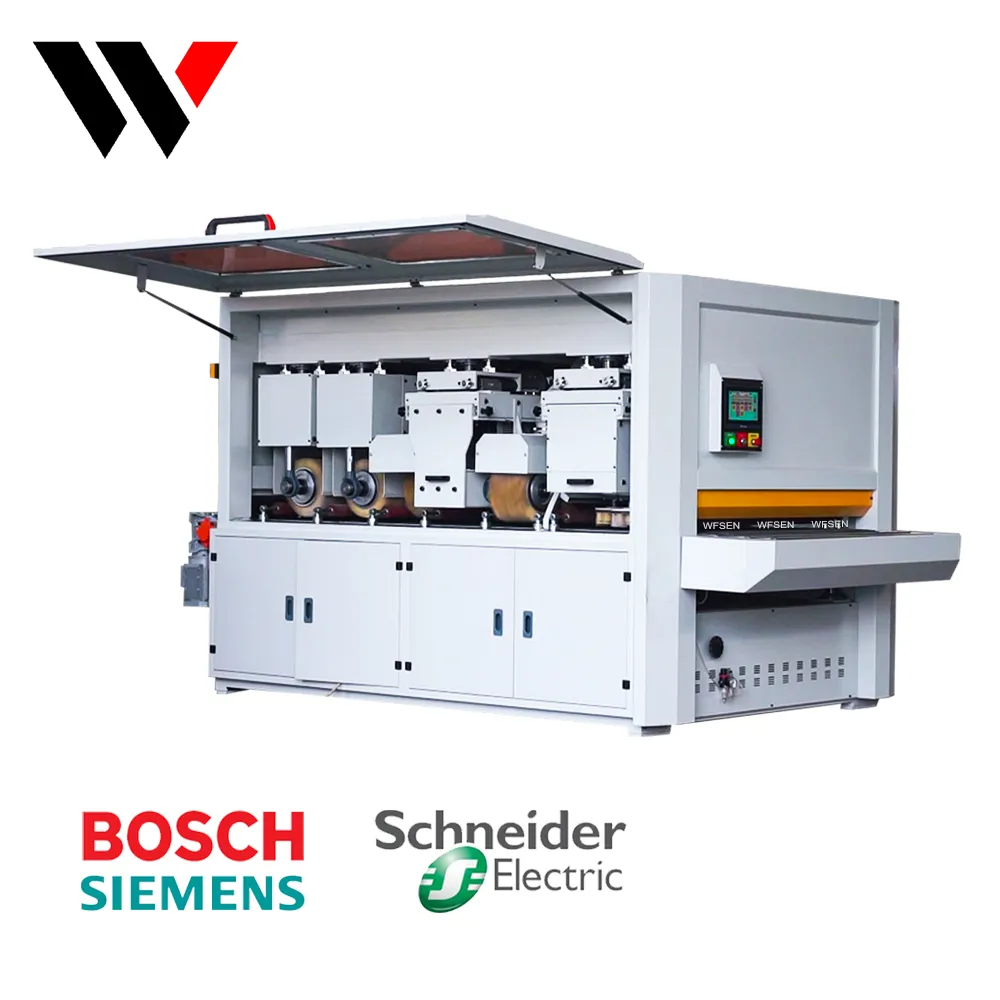
Open the cabinet and the roller count is the first thing you see: two-roller on the left, three-roller on the right. Tension levers and pressure gauges are set on the machine.
Technical Specifications
| Working width | 1000, 1300 mm | First motor | 15/22, 37 kW |
| Min. working length | 500 mm | Second motor | 11/15, 22 kW |
| Working thickness | 3-110 mm | Third motor | 11, 22 kW |
| Feeding speed | 6-30 m/min | Feeding motor | 1.5, 4/4.5 kW |
| First roller | 190, 240 mm | Lifting motor | 0.37, 0.55 kW |
| Second roller | 190, 210/240 mm | Working air | 0.6 MPa |
| Third roller | 190, 210 mm | Dust collector | 5.5, 7.5 kW |
| Abrasive belt size | 1020 × 2020, 1320 × 2020 mm | ||
| Overall dimensions | 1880/2180 × 1600 × 1950, 2180/2550 × 2600 × 1950 mm | ||
| Weight | 2000/2900, 3200/4100 kg | ||
Belt length is 2020 mm on both builds, belt width 1020 mm or 1320 mm; both are printed in the table above and fixed at order, so confirm them with us before you buy consumables. The full method, including how belt sizes differ across the rest of the range, is set out in how sanding belts are sized and replaced.
Control Panel and Thickness Setting
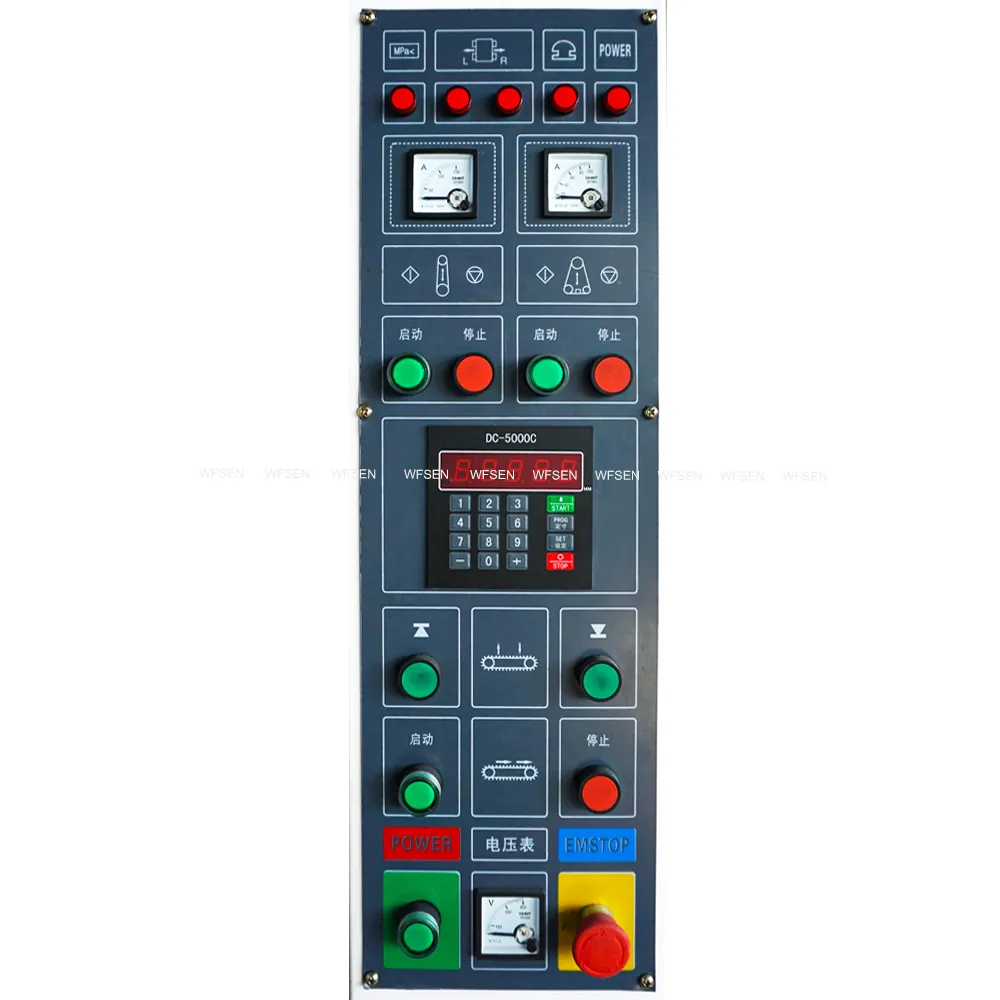
Two panels are offered. The button and digital display version carries start and stop, the ammeters and the thickness readout. The touch screen version below adds unit-by-unit control: each sanding unit starts and stops on its own.
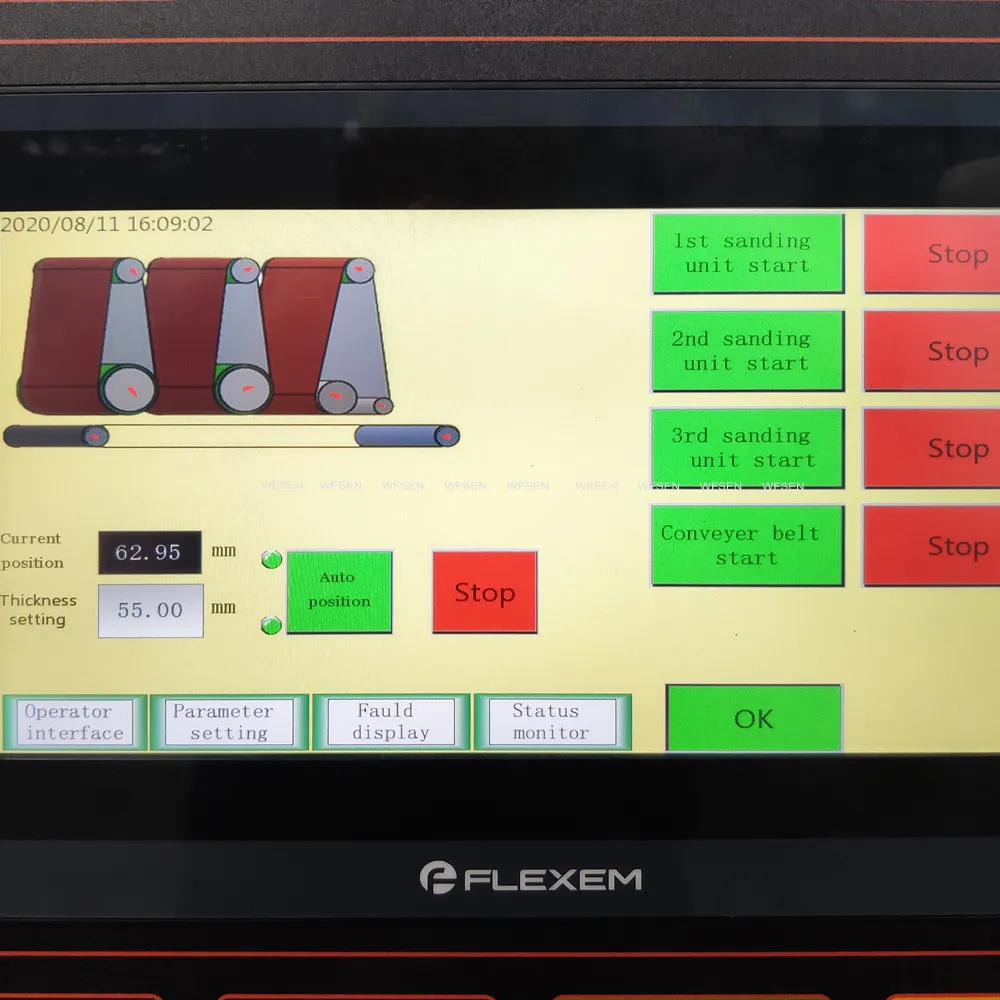
Both panels use the same working air supply, 0.6 MPa. Tension and tracking pressures come off that line, so the compressor is part of the specification.
Design and Operating Notes
Motor list
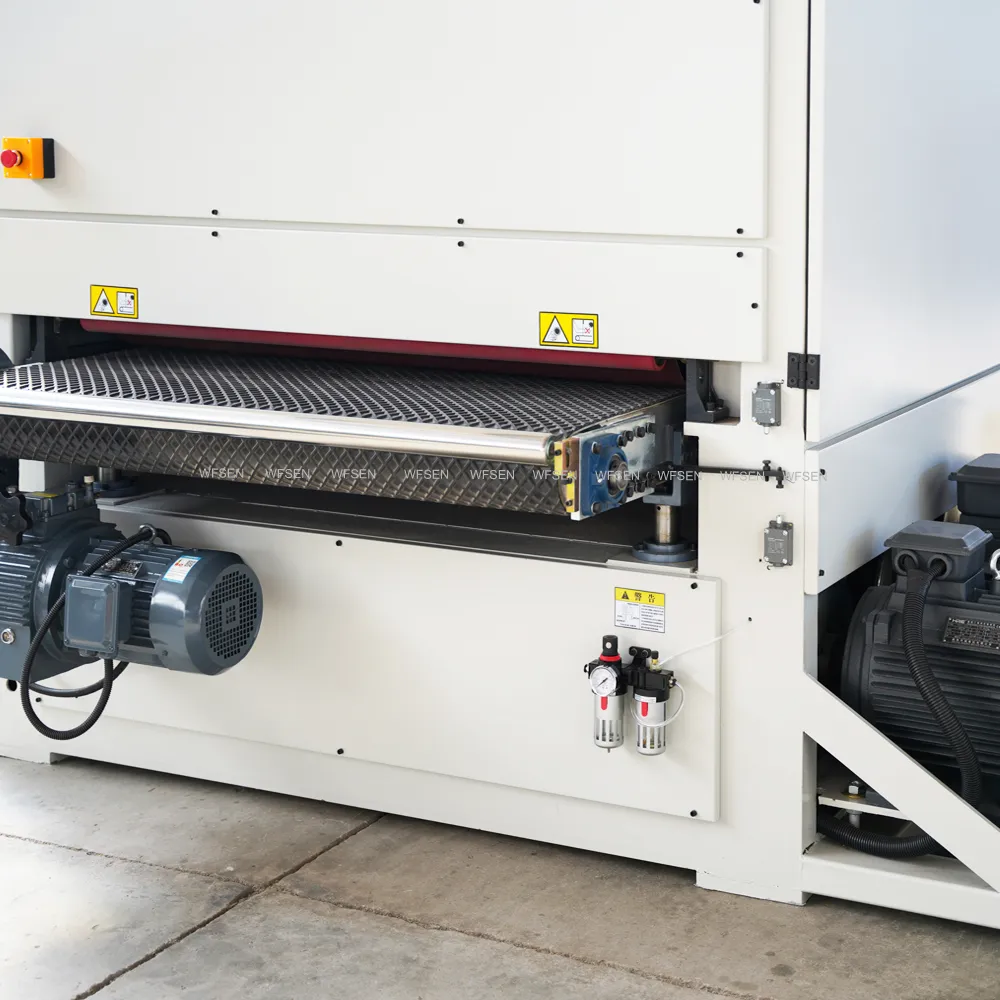
The full motor list is in the table. What matters on site is the first motor, at 15/22 or 37 kW: the two builds do not draw the same supply.
Belt tracking
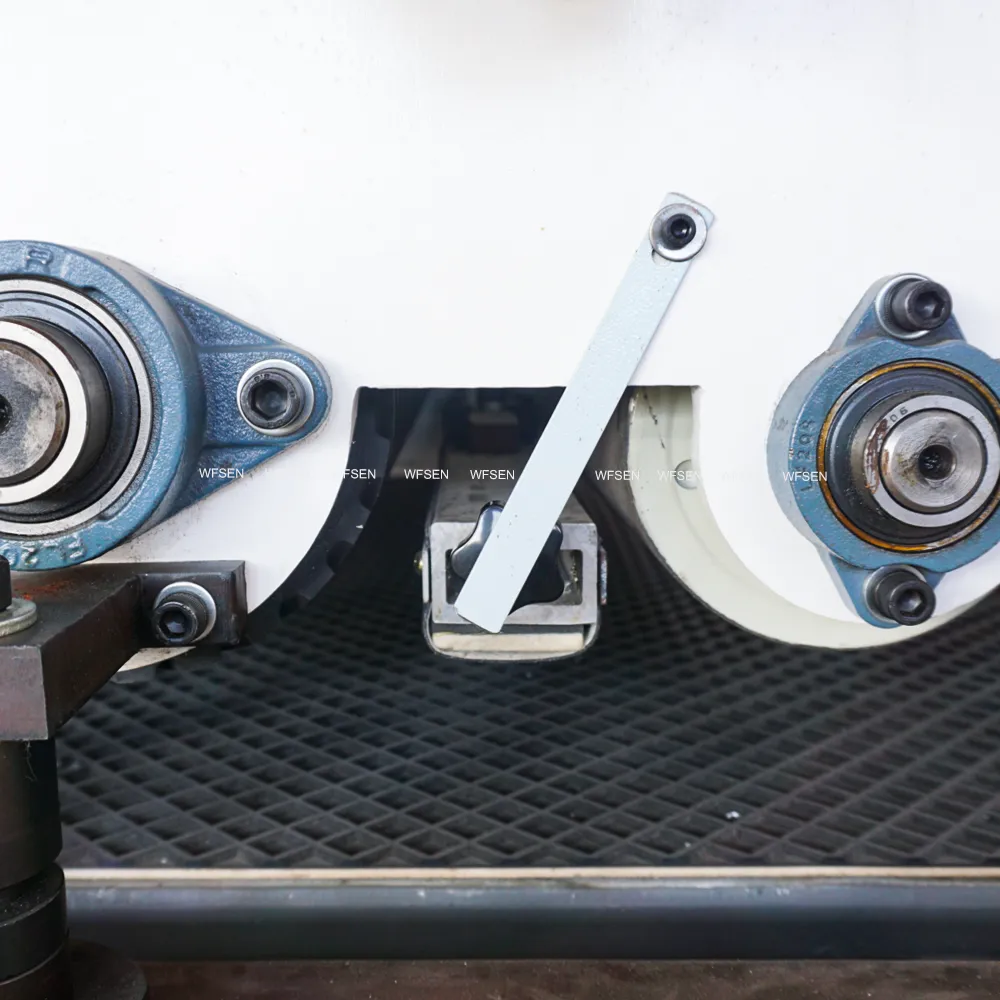
Tracking and pressure are set on the machine itself, which is why the thickness range runs to 110 mm without touching the worktable.
Changing a belt
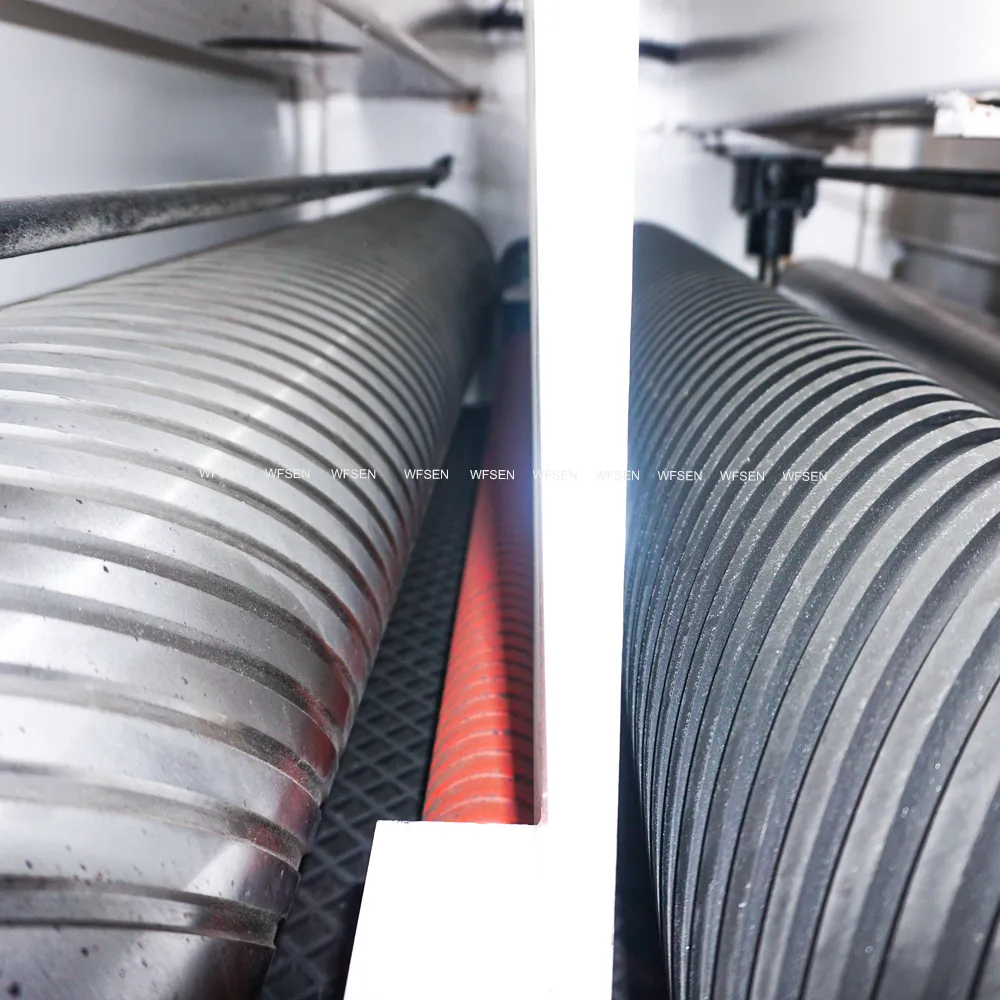
The belt is released and changed without dismantling a roller — this model lists it as "easy replaced sanding belt". An abrasive wears by the board and the cut, not the calendar, so replacement is judged on surface signals — how belt replacement is judged.
Safety and dust
The machine carries an emergency stop and dust protection guards, and the table lists the dust collector motor. Extraction is specified alongside the sanding rollers; if you run a central system, tell us the air volume.
Frame and weight
Overall dimensions and weight are in the table above, from 2000 kg to 4100 kg. The heavier figure is what your floor and unloading plan must handle.
Boards, Belts and What Wears First
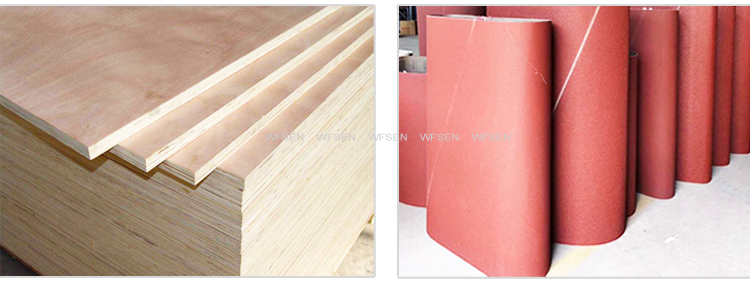
Different boards need different belts: plywood and veneered panels for flatness, particle board for thickness calibration, a coated panel for the surface alone. The machine is ordered with the board type, not a fixed grit.
This work is one stage in a longer line: raw board goes to the planer sander, which puts a planing head in front of the sanding rollers; coated thin panel to the primer sanding machine, down to 2.5 mm; both faces in one pass to the top and bottom sanding line; edge work to the vertical belt edge sander.
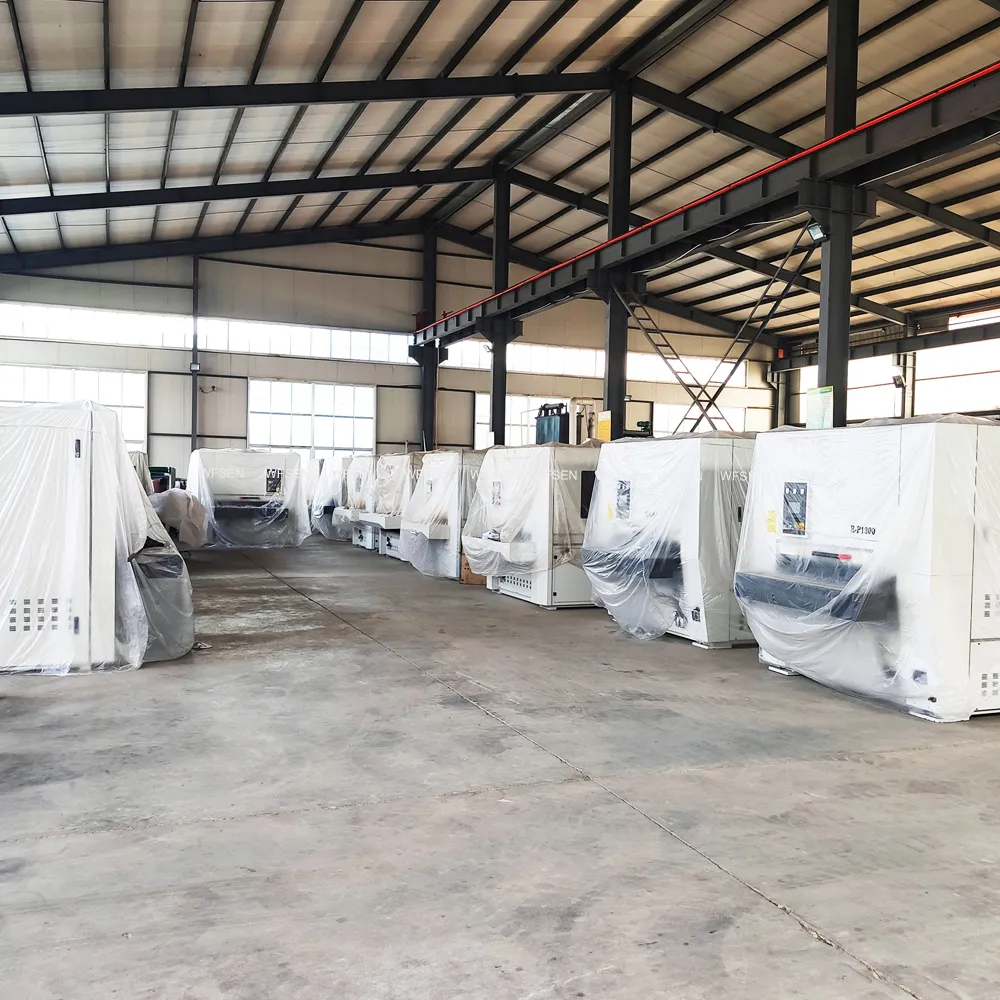
Workshop
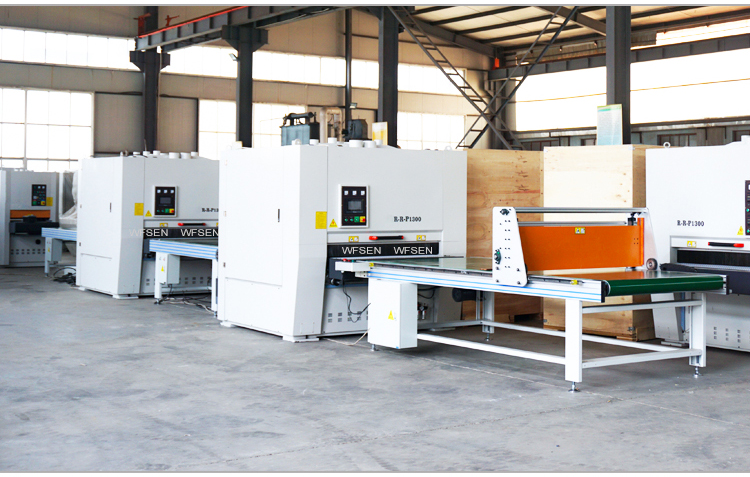
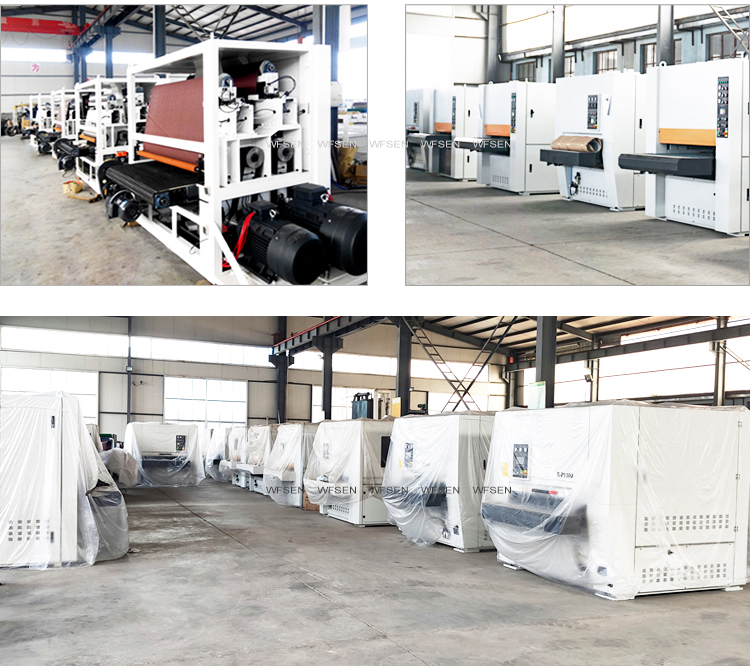
Every machine is assembled and run in our workshop before packing. The photo below shows the floor: units under assembly on the left, finished machines on the right.
Packing and Shipping
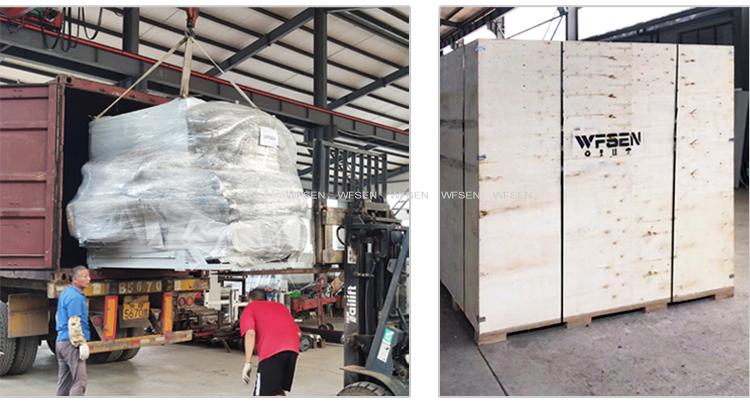
The machine travels wrapped and crated and is lifted into the container at the workshop. It needs a 20 or 40 foot container on its own, so plan for that early.
Service and Contact
Every machine carries a 2-year warranty and is built in Qingdao; spare and wear parts come from the same workshop.
Send us your board type, panel size and the thickness you need, and we will confirm the build, belt size and roller count in writing. See the contact page or our factory page, and the wider range in sanding machines and the machine types compared.