A spindle moulder is a motor with a vertical shaft, a cast table and a fence. There is no feed mechanism built into the machine, no enclosure, and nothing that keeps the timber moving except the operator or a separate feeder bolted to the table.
That is why the same machine produces a clean raised panel in one shop and a burned, torn profile in another. The motor did not change. The setup did.
This is what the numbers on the MX5117B spindle moulder sheet actually constrain, and how to work inside those constraints.
The shaft is 35 mm. The table measures 1100 x 670 mm. Spindle speeds are 6000, 8000 and 10000 r/min, set by moving the belt between pulley steps rather than by a dial. Maximum working thickness is listed as 120 or 150 mm depending on configuration, maximum working width 400 mm, and the motor is 5.5 or 7.5 kW. Rotation runs either clockwise or anticlockwise. The whole machine weighs 350 kg.
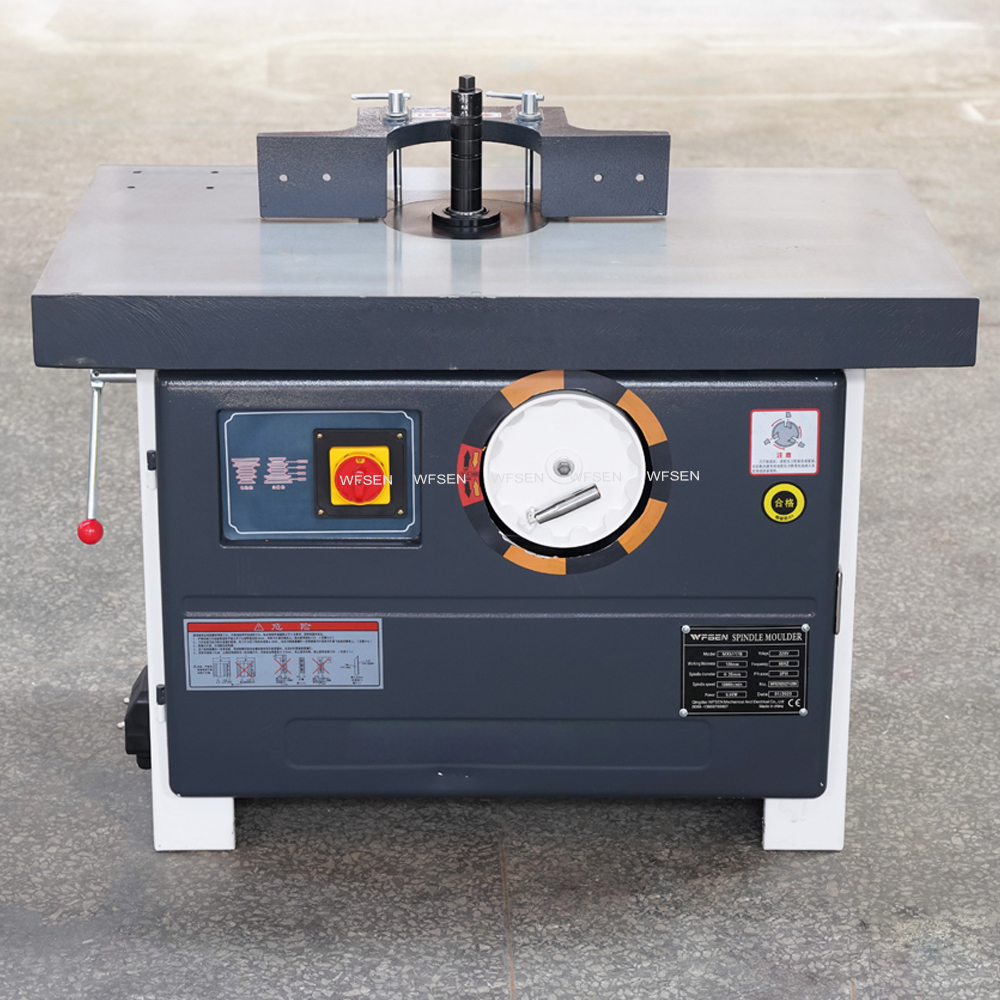
Three speeds. One shaft. Apart from the on-off switch, that is the entire control interface.
Start with the 35 mm bore, because it decides what tooling you can hang. Blocks bored for a different shaft need an adapter sleeve, and every sleeve adds one more interface between the motor and the cut. On a machine that already has three speed steps to think about, fewer interfaces is better.
Cutter block diameter sets both the finish and the geometry of the setup. A larger block gives a longer cutting arc, which spreads wear and smooths the cut, but it also increases the gap you have to bridge with the fence and the table ring. The block has to clear the table opening, and the opening has to be closed down to the block as far as the work allows.
Two habits prevent most of the trouble. First, always close the table ring around the block before running anything, so a short offcut cannot drop into the opening. Second, use a false fence: a sacrificial board fixed to the fence and cut through by the block itself, so the timber is supported right up to the cut instead of hanging over an open gap.
Spindle speed on its own tells you very little. Cutting speed at the tip of the knife is what determines whether the timber is sheared or scraped, and tip speed depends on both spindle speed and block diameter.
A 125 mm block at 6000 r/min runs at roughly 39 m/s. The same block at 8000 r/min reaches about 52 m/s. A 100 mm block at 10000 r/min also lands near 52 m/s. That is the whole logic of the three steps: keep the cutting edge moving at a similar speed while the tool diameter changes.
| Block diameter | 6000 r/min | 8000 r/min | 10000 r/min |
| 80 mm | 25 m/s | 34 m/s | 42 m/s |
| 100 mm | 31 m/s | 42 m/s | 52 m/s |
| 125 mm | 39 m/s | 52 m/s | 65 m/s |
| 150 mm | 47 m/s | 63 m/s | 79 m/s |
Read that table as what the spindle can do, not as permission. The block carries its own maximum speed, stamped on it by its maker, and that figure always wins. Most large steel blocks are cleared well below the top step.
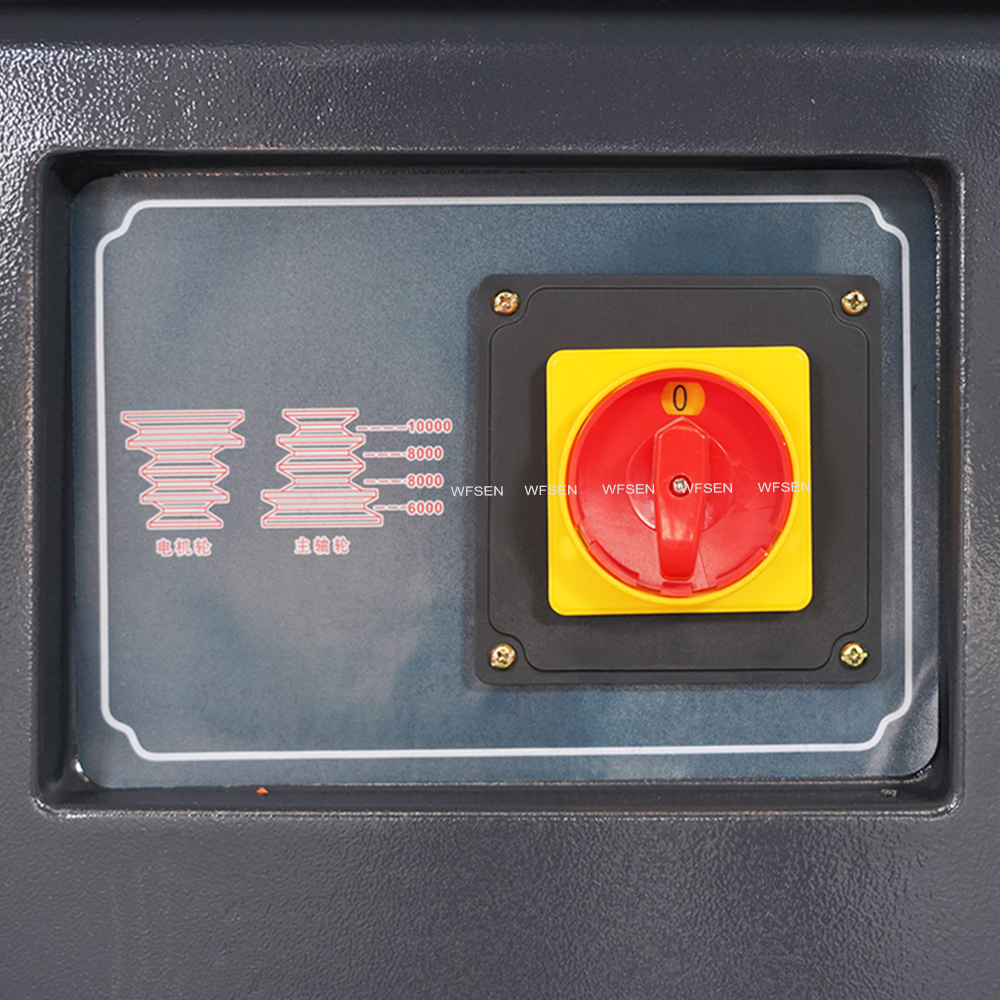
In practice: 6000 for large diameter blocks and heavy profiles, 8000 for most daily work, 10000 for small tooling and fine edges. Dropping a small block to 6000 is the commonest cause of torn grain that gets blamed on the timber.
Power and speed interact here too. The 5.5 kW motor pulls a full profile in hardwood at 8000 r/min without strain. Going to 7.5 kW buys margin for deep cuts and continuous production, not a different quality of finish. If the cut is burning, more power will not help.
On a spindle moulder the fence is not a guide, it is part of the tooling. Two independent cheeks let you offset the outfeed side to suit the profile depth, and that offset is what keeps the timber supported after it has been cut.
A guard and a hold-down are not accessories to be fitted when the inspector visits. The cut happens at the top of a spinning block with nothing between the operator's hands and the knives but the timber. Short stock, narrow stock and anything under about 300 mm long needs a push block or a jig, not fingers.
Two cheeks. Both adjustable. Both matter.
Kickback on this machine comes from feeding in the direction of rotation. The MX5117B runs either clockwise or anticlockwise, which makes it useful for opposite-hand profiles, and equally easy to feed the wrong way. Check the arrow against the direction you are pushing every time the rotation is changed.
A cutter block is a spinning weight with knives bolted into it. At 8000 r/min a 125 mm block turns 133 times a second, and any imbalance becomes a vibration the machine cannot absorb at 350 kg.
You hear it before you see it. A block that is out of balance or badly assembled produces a steady hum with a beat in it, and the finish comes out with a regular ripple that follows spindle speed rather than feed speed. Stop the machine at that point. Continuing to run it damages the bearings and teaches nothing.
Limiters are the other half of a safe block. A limiter sits behind the knife, slightly lower, and controls how deep the knife can bite in one revolution. On hand-fed work it is what separates a heavy cut from a thrown workpiece. Blocks without limiters belong on a machine with a feeder and a full enclosure, and preferably neither.
Check the block for cracks before every shift. Not once a month. Every shift.
A three-roller power feeder changes the economics of the machine more than any other addition. It holds the timber down and against the fence at a constant rate, which removes the two variables an operator introduces: uneven feed speed and inconsistent pressure.
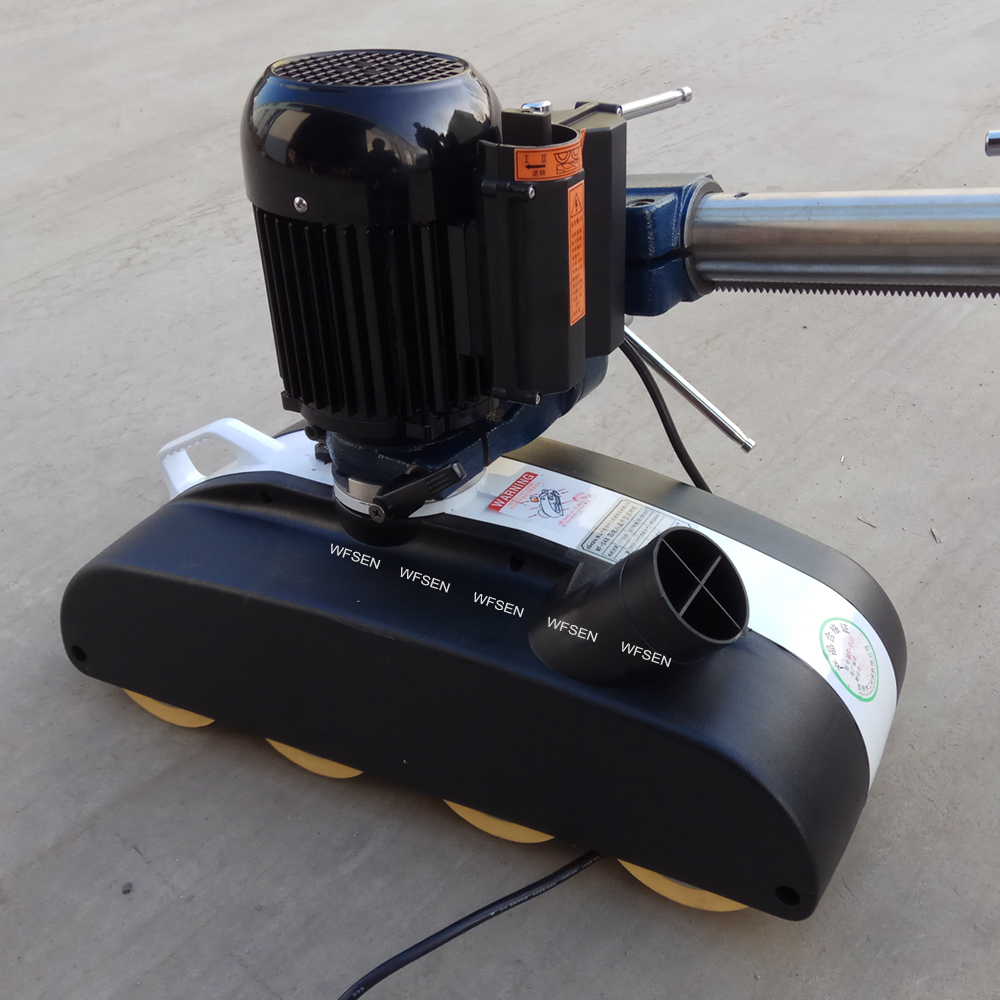
Profiles that came out with a ripple under hand feed usually come out clean under a feeder at the same spindle speed, because the cut per tooth stops fluctuating. It also keeps hands away from the block, which matters more than the finish.
Maximum working width of 400 mm is the limit on tenons, coping and wide profiles. A door stile with a 450 mm tenon shoulder is not a job for this table.
Maximum working thickness of 120 or 150 mm is the limit on how tall a section can stand against the fence. Thick beams, deep window heads and heavy handrail sections need a bigger machine, or a different process.
Weight is the third limit. The one buyers ignore. At 350 kg this is a benchtop-class machine with a cast table. That is fine for blocks up to about 150 mm, and it is why a very large diameter block on a light frame will show vibration in the finish. Mass absorbs vibration; if the profile needs a 180 mm block, the machine needs more mass.
Clean the table and check the ring. Fit the block on the shaft, tighten, then turn it by hand through a full revolution before the power goes on. Select the speed to match the block diameter. Bring the fence up to the block or the bearing, then fit the false fence and cut it through. Set the guard and the hold-down. Run one scrap piece of the same species and thickness, and only then start on the job.
If the scrap comes out clean and the job comes out torn, the difference is the species, the moisture content, or the depth of cut, in that order, and changing one of those three is faster than readjusting a fence that was already set correctly.
That sequence takes six or seven minutes. Skipping the hand rotation or the scrap cut takes less time than that and costs a knife, a board, or a finger.
Straight knives in a block are consumables. They arrive with a grind, they lose it, and the machine has no way of telling you when. Nothing changes in the sound or the ammeter between a sharp edge and one that is tearing fibres instead of cutting them, which is why the finish on the last fifty pieces of a run is often worse than the first fifty and nobody notices until the parts are stacked.
Keep a spare set.
Grinding them in-house is practical if the shop already sharpens planer knives, since the geometry is the same straight edge in a clamp. The PS110 and CG101 setup covers that job. If the shop does not, a local grinding service on a two-week rotation is cheaper than the scrap a dull block generates.
Ask whether the spindle is braked, and how long it takes to stop from 10000 r/min. Ask which voltage the 7.5 kW version is wired for, since a larger motor may need a different starter. Ask for the table flatness figure. Then send your own cutter block and a sample of your timber, and have the machine run at 8000 r/min on that block before it ships. A finish test on the buyer's own tooling is worth more than any specification sheet.
If the work is straight four-sided stock rather than profiles, the calculation changes: a four side moulder does in one pass what this machine does in four setups, at the cost of flexibility. The multi planer range lists both routes, and the thicknesser and surface planer comparison covers the machines that usually sit next to a spindle moulder. Full MX5117B parameters are on the product page.