Sheet metal leaves the laser or the punch with a burr on every cut edge and a scratch pattern that no powder coat will hide. Two very different machines are sold to fix that, and buyers confuse them constantly. One brushes the surface. The other grinds it wet.
On this site both sit under the same category heading, which means the model numbers are the only clue at first glance. They are worth reading. The three machines below differ by 1,800 kg in weight and by a factor of five in feed speed, and the difference has nothing to do with how hard they work.
The W-R1100 and the W1100 each carry four brush rollers, Ø300 × L400 mm, every one on its own 2.2 kW motor, turning between 8 and 20 revolutions a second. Abrasive filaments reach into an edge and round it over. They do not flatten a sheet, and they will not take three tenths of a millimetre off a plate.
That distinction decides more purchases than price does. A buyer who wants a scratch removed from a face needs a different machine entirely, and no amount of brush pressure will turn this one into it.
The specification carries a line most people skip: polishing angle R0.1–0.5 mm. It describes the edge radius the machine is built to produce. A radius, not a thickness. Once you read it that way, the rest of the page falls into place.
Both dry machines are rated 1100 mm wide, 0.2–70 mm thick, with a minimum workpiece of 50 × 50 mm. Two millimetres is an ordinary sheet. Two tenths of a millimetre is foil, and foil will not stay flat on its own.
At that thickness the hold-down system is doing more of the work than the brush is, and a sheet that lifts will catch and wrap itself around a roller before the operator can reach the stop button. Fifty millimetres square is the other end of the same problem: too small to be held, too light to stay put.
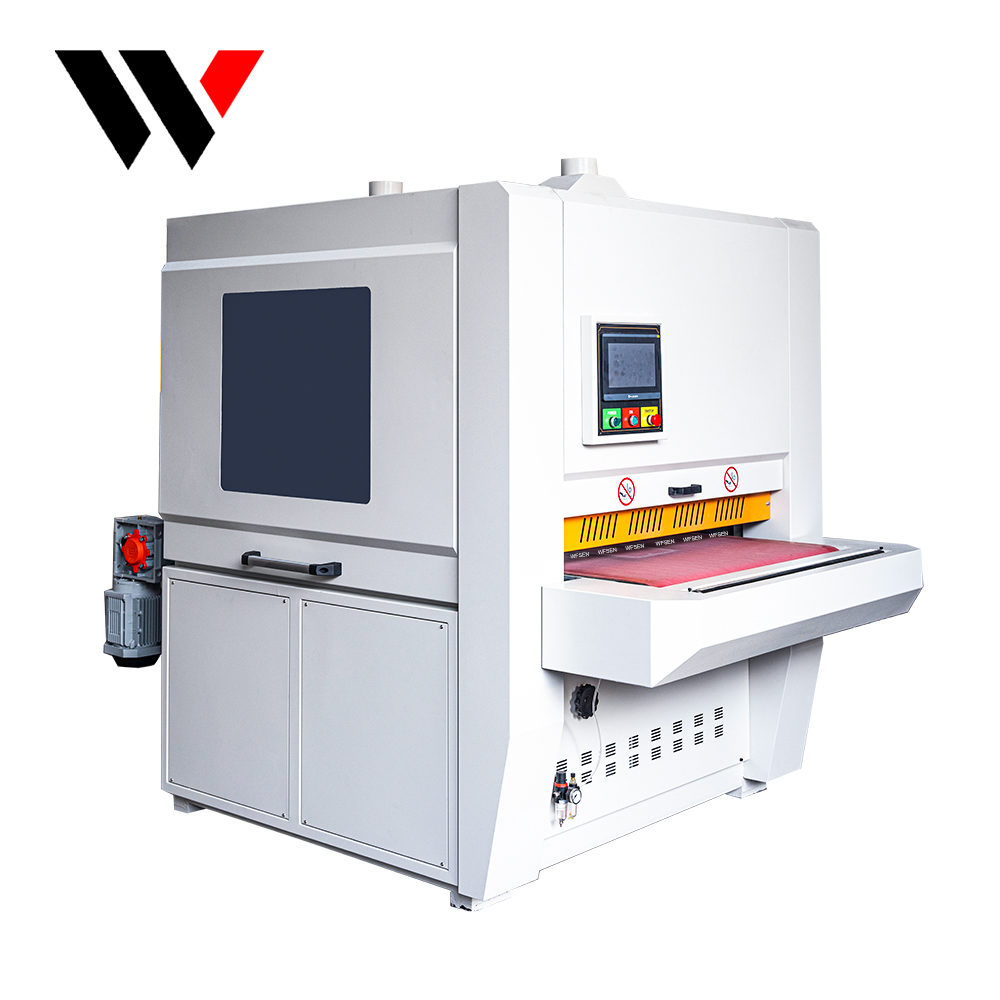
The first dry machine holds the sheet down with vacuum adsorption rated at 15 kW. Read the number twice. The four brush motors together are 8.8 kW, so the single vacuum system is nearly twice the power of everything that touches the metal.
The whole assembly weighs 3,800 kg and occupies 3000 × 2100 × 2400 mm. A 15 kW pump, a sealed plenum and the ducting between them are most of the reason, and none of that machinery is visible in a photograph of the machine.
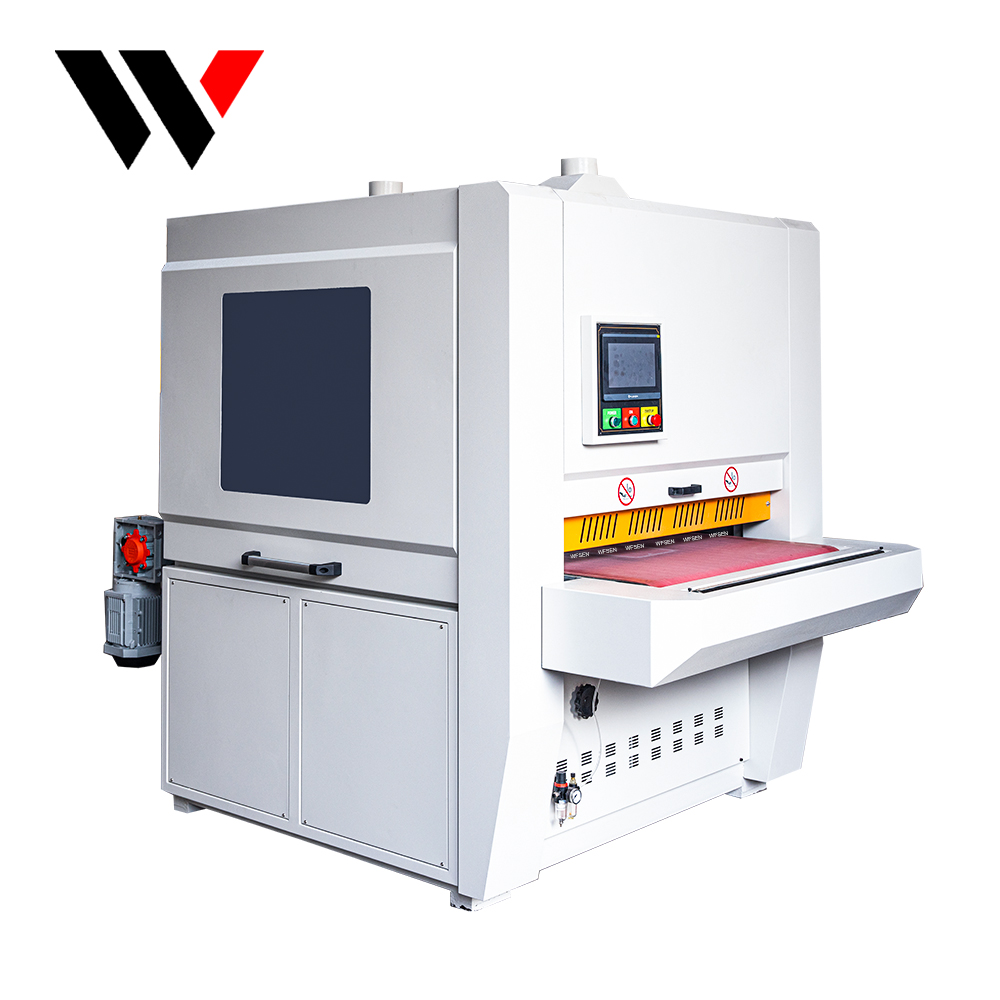
The second machine is the same machine with a different hold-down. Magnetic iron adsorption over 820–920 mm replaces the vacuum pump. All four brush motors stay at 2.2 kW × 4. Feed stays at 3 kW. Both lift motors stay at 0.37 kW, and working air stays at 0.6 MPa.
Nothing about the sanding changed. Only the way the sheet is held.
3,800 kg against 2,000 kg. The magnet version also shrinks to 2400 × 1800 × 2200 mm, saving floor space on two axes at once, which matters a great deal when the machine is going into a building that already has a layout.
The lighter machine is not the lesser machine. It is the same sanding head on a lighter chassis, and the chassis is lighter because a permanent magnet array weighs far less than a vacuum pump, a plenum and the ducting that ties them together.
Floor loading decides more installations than buyers expect. A 3,800 kg machine on four small feet is not the same building problem as a 2,000 kg machine, and a second floor is usually where that argument ends.
A magnet holds steel. It does nothing for aluminium, copper, brass, or austenitic stainless steel, because none of those are ferromagnetic. Put a 2 mm aluminium sheet on a magnetic table and it will sit there looking perfectly fine until the brush touches it.
So the question is not which machine is better. It is what arrives on your pallet, week after week. Shops that run steel only should be looking hard at the 2,000 kg machine and the twenty thousand or so they will not spend on a vacuum pump.
Mixed production usually ends up at the vacuum machine and never looks back. One aluminium job is enough to stop a magnetic table dead, and the schedule does not care that steel was ninety percent of last month.
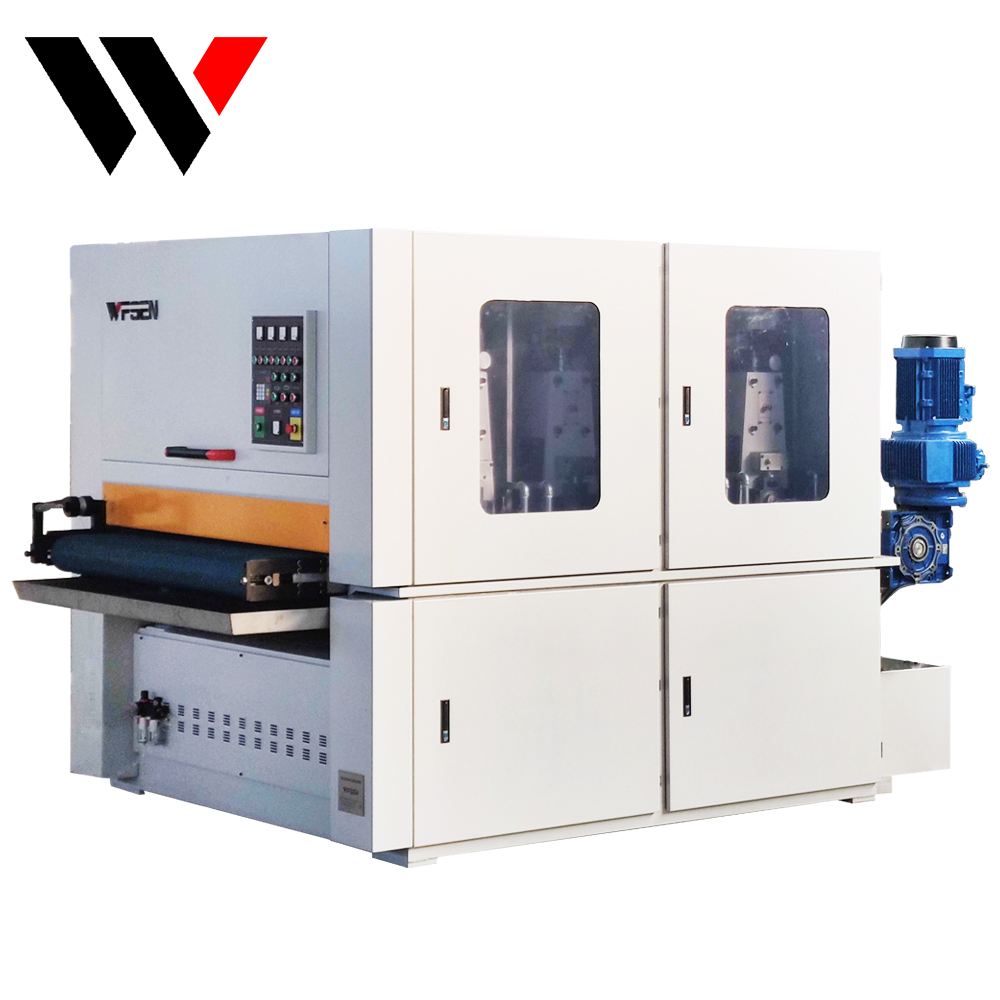
The R-R and R-R-R-R 1000 series shares a category with the brush machines and almost nothing else. Working width is 1,000 mm. Minimum working length is 500 mm. Thickness runs 2.5–110 mm, so the thin end starts above where the brush machines stop being useful, and the top end reaches plate.
Belt speed is frequency controlled, feed runs 6–30 m/min, and each head pair carries two 190 mm rollers. Water is the whole point of the design: it cools the belt and takes the dust into a tank instead of into a filter bag.
That feed range is the clearest statement of what each machine is for. The brush machines creep: six metres a minute at the top end, half a metre at the bottom, because a filament has to dwell on an edge to round it.
The wet machine runs five times faster at the top of its range and never goes below six. It is built to pass volume through, not to work a burr. Put a hand-fed job on it and the operator becomes the bottleneck within an hour.
Two more figures worth holding on to. Working air is 0.6 MPa on every model here, so one compressor setting covers the whole metal side of a shop. And the minimum working length on the wet machine is 500 mm, which quietly rules out the short offcuts that a brush machine handles down to 50 mm square.
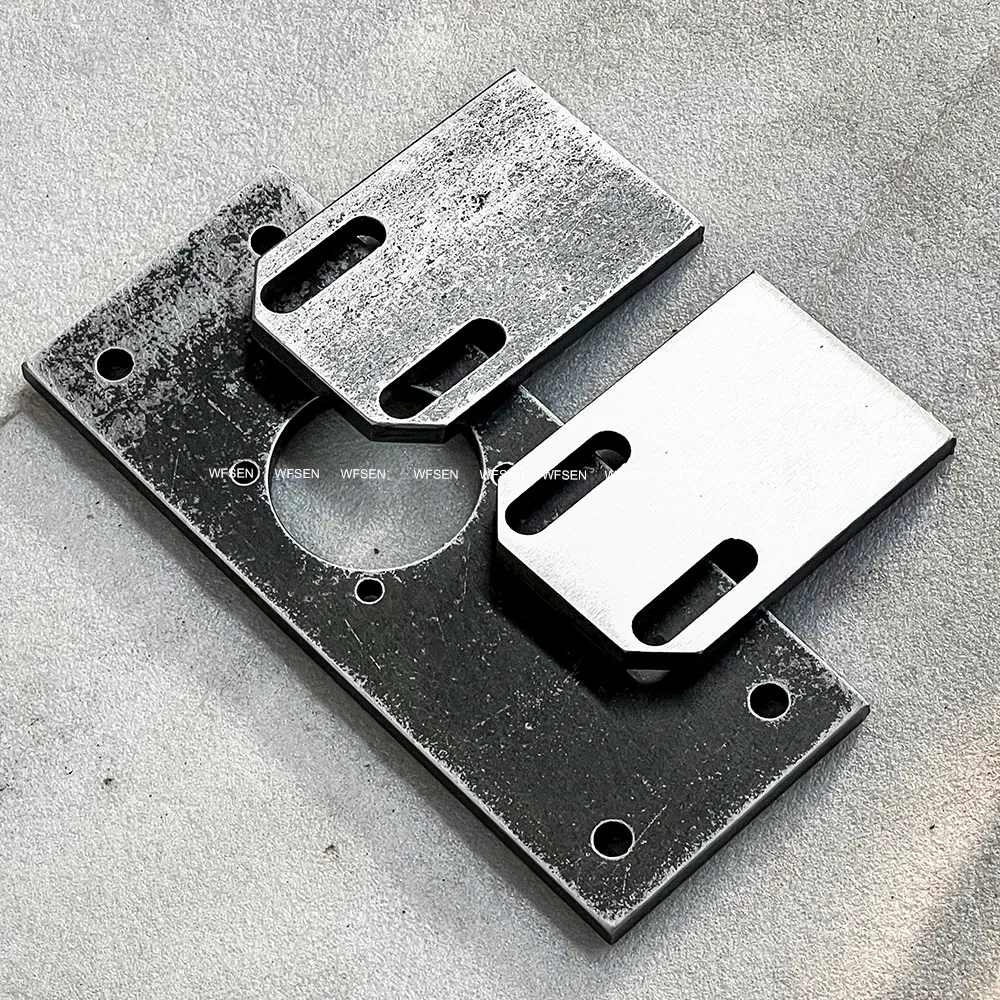
None of these machines calibrates thickness. None will flatten a plate that came off the shear with a bow in it. None replaces a wide belt sander on a flatness problem, and none puts a mirror finish on a face.
They deburr. They radius. They clean a surface and they hide a scratch pattern from the next process. Ask for more than that and you are buying the wrong machine at the right price, which is the most expensive way to buy anything.
All three machines take 0.6 MPa of working air, and all three need extraction. Dry brushing on aluminium produces a fine combustible dust, so a pulse jet collector is not optional equipment on that material. It is part of the process.
The wet machine trades that problem for another one. Water has to go somewhere, the tank needs cleaning on a schedule nobody enjoys, and anything ferrous needs drying before it rusts. Neither route is free, and neither is a mistake.
Everything published on the three models, in one place. Where a cell is blank the manufacturer does not publish that figure.
| Item | W-R1100 | W1100 | R-R / R-R-R-R 1000 |
|---|---|---|---|
| Hold-down | Vacuum, 15 kW | Magnet, 820–920 mm | Conveyor |
| Working width | 1100 mm | 1100 mm | 1000 mm |
| Working thickness | 0.2–70 mm | 0.2–70 mm | 2.5–110 mm |
| Feed speed | 0.5–6 m/min | 0.5–6 m/min | 6–30 m/min |
| Brush rollers | 4 × Ø300 × L400 mm | 4 × Ø300 × L400 mm | |
| Brush motor | 2.2 kW × 4 | 2.2 kW × 4 | |
| Roller size | 190 mm | ||
| Weight | 3800 kg | 2000 kg |
The largest sheet you actually run, and the smallest. The thickness range across a normal week. Whether every one of those sheets is ferrous. The finish your customer will accept. And the power you have at the wall.
Five answers. They pick the machine, and everything else on the page is detail. A wider look at sander types puts these next to the wood machines, the sanding machine range lists all of them, and the three metal models are here: W-R1100, W1100 and the R-R-R-R 1000.